
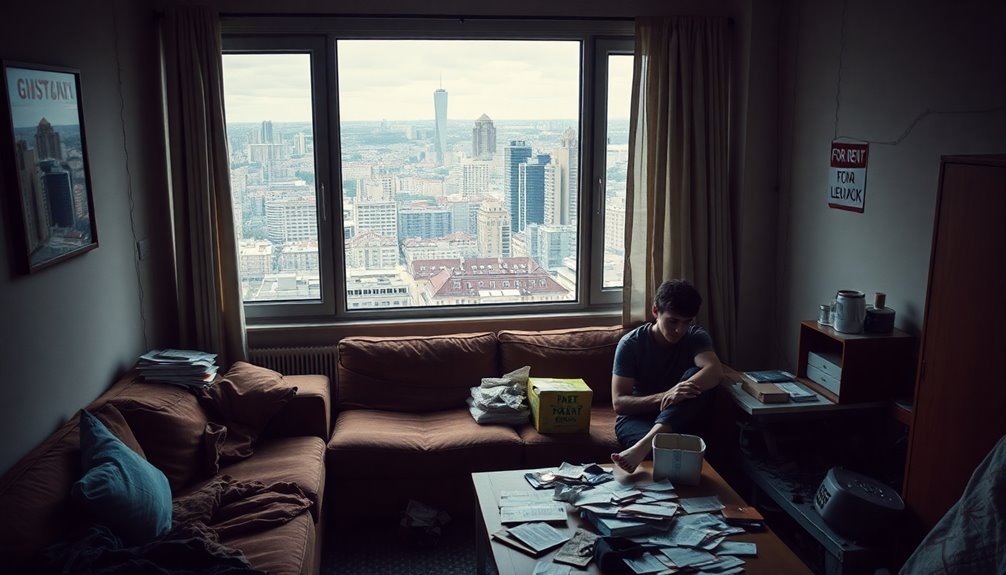
Europe’s Rent Crisis: Why Young People Can’t Afford to Live Alone
Subtitle
The Scientific Journal for Everyone – When scientists speak human, people listen.
Summary
In cities across Europe, a generation of young adults is putting their lives on hold—not because of lack of ambition, but because of unaffordable rent.
From Berlin to Barcelona, Paris to Prague, rising rental prices are forcing millions under 35 to delay independence, cohabit with parents longer, give up privacy, and abandon city centers altogether.
This article explores the roots of Europe’s rent crisis, how it’s reshaping youth life paths, and what governments must do before the housing crunch becomes a generational fracture.
Why It Matters
Housing isn’t just a commodity—it’s the foundation of adulthood, dignity, and freedom.
When rent consumes more than 30% of a young person’s income, it affects:
-
Mental health: Crowding, instability, and insecurity take a toll
-
Work mobility: Young professionals are locked out of job-rich cities
-
Family formation: Delayed or abandoned plans to start a household
-
Education choices: Commuting or staying local to avoid housing costs
-
Inequality: Wealthy families can help; others face lifelong disadvantage
And in the bigger picture? An entire generation risks becoming rent-burdened, rootless, and resentful—a major social and political liability.
What the Research Says
1. Housing costs outpace wages
According to Eurostat (2024), in 20 out of 27 EU countries, rent has grown faster than median wages since 2018.
In cities like Dublin, Lisbon, and Amsterdam:
-
Rent for a 1-bedroom flat consumes 45–60% of a young worker’s net income
-
Demand from digital nomads and Airbnb rentals exacerbates pressure
-
New construction lags far behind urban population growth
The math simply doesn’t add up.
2. Young adults are staying with parents longer
Data from the European Commission shows:
-
The average age to leave the parental home has risen to 27.3
-
In countries like Italy, Slovakia, and Croatia, it’s over 30
-
Youth from lower-income families are more likely to delay leaving
This isn’t just cultural—it’s economic necessity.
3. Subsidies and rent caps have mixed results
-
Cities with strong rent control (e.g., Vienna, Stockholm) offer relative stability
-
But strict caps without supply expansion can lead to housing shortages and black markets
-
Portable housing subsidies (e.g., France’s APL) help renters—but may also inflate prices if not regulated
Policy design matters—and requires balancing supply, equity, and regulation.
What’s Behind It
1. Underinvestment in affordable housing
-
Many European governments reduced public housing investment after the 2008 crisis
-
Land speculation and real estate financialization diverted focus from affordability to returns
-
Zoning restrictions, NIMBYism, and slow permitting block new housing supply
The result? A demand-supply mismatch, especially in cities with job growth.
2. Touristification and platform rentals
-
The rise of Airbnb and short-term rentals shrank the supply of long-term homes
-
Some cities have lost 10–20% of rental units to tourism-based conversions
-
Digital platforms outbid locals, fragment neighborhoods, and raise rents
This isn’t just about housing—it’s about who cities are for.
3. Wage stagnation and precarious work
-
Many young workers face short-term contracts, low pay, and gig-based income
-
Inflation has further eroded purchasing power
-
Meanwhile, landlords increasingly demand multi-month deposits, proof of steady income, and credit scores
Even with a job, many young adults don’t qualify for housing.
What’s Changing
1. Policy momentum—slow but growing
-
The EU’s Housing First agenda promotes affordability as a human right
-
Spain and Portugal have introduced rent caps, tenant protections, and social housing projects
-
Berlin and Vienna are experimenting with large-scale public housing models
But progress is uneven—and often contested by real estate lobbies.
2. Grassroots and youth activism
-
Tenant unions are growing: Barcelona’s Sindicat de Llogateres, Amsterdam’s Woonopstand
-
Young people are organizing rent strikes, squats, and policy campaigns
-
Calls for housing justice are central to youth political movements across Europe
What used to be a personal problem is becoming a political issue.
3. Digital solutions—but with limits
-
Co-living startups, housing platforms, and shared equity models are emerging
-
But many are niche or high-end, not accessible to average-income youth
-
Algorithms alone won’t solve structural under-supply
The future of housing can’t just be tech-driven—it must be equity-driven.
Big Picture
Europe’s rent crisis is not just a housing issue—it’s a generational justice issue.
Without decisive action, we risk creating a two-tiered society:
-
Those who inherit wealth and can access secure housing
-
And those who rent indefinitely, move frequently, and build little financial security
If housing becomes a luxury, so does independence.
Conclusions
1. Rent has become a structural barrier for young people
Wages alone can’t keep up with urban housing costs. The result: stalled life plans and growing inequality.
2. Solutions exist—but require political courage
Governments must invest in social housing, regulate short-term rentals, and rebalance tenant-landlord power.
3. Youth disillusionment is rising
The inability to afford basic independence erodes trust in political and economic systems.
4. Housing is essential infrastructure
Like healthcare or education, secure housing must be treated as a public good—not just a private investment.
5. It’s time to rethink what cities—and homes—are for
Do we want cities for tourists and landlords—or for young people building their lives?
The Deeper Lesson
When young people can’t afford to live alone, it’s not just a market failure—it’s a failure of imagination, policy, and fairness.
Fixing the rent crisis isn’t just about lowering prices—it’s about raising expectations for what a society owes its youth.
Sources
-
Eurostat (2024). Housing Affordability in the EU
-
European Commission (2023). Youth Transitions and Housing
-
OECD (2022). Affordable Housing and Urban Development
-
UN Habitat (2023). Cities for People, Not Profit
-
Housing Europe (2024). State of Housing in the EU
Q&A Section
Why can’t young people just move to cheaper areas?
Job opportunities, universities, and cultural life are concentrated in cities. Moving out often means sacrificing income and opportunity.
Is rent control a good solution?
It helps in the short term but must be matched with housing supply expansion to avoid bottlenecks.
What can governments do?
Build more public housing, limit Airbnb-type rentals, increase rent transparency, and subsidize low-income tenants.
Is this a new problem?
No—but it’s become more acute due to digital tourism, wage stagnation, and housing underinvestment.
Is it worse in some countries?
Yes—Southern and Eastern Europe have higher parental cohabitation rates due to lower wages and less public housing.
