
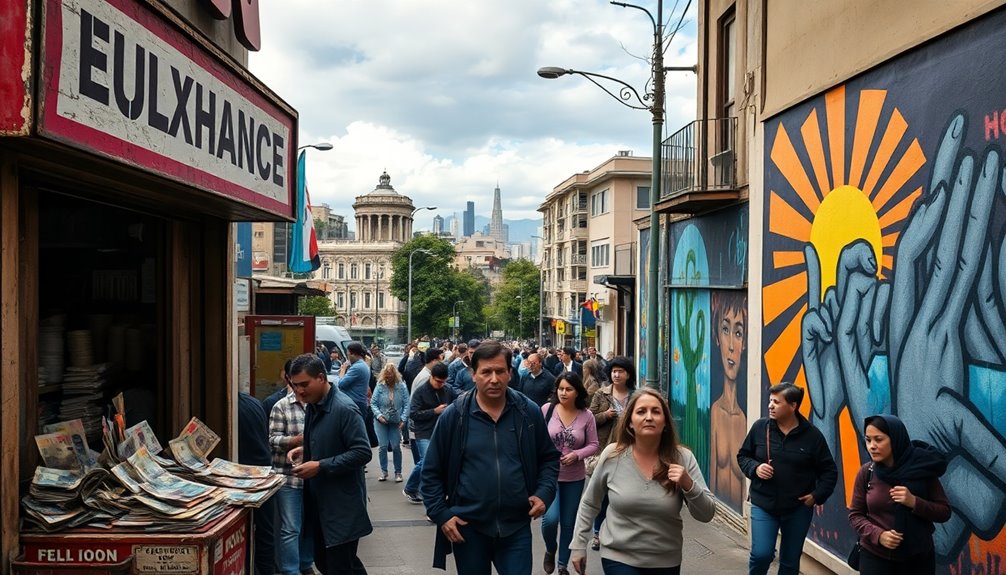
Argentina’s Currency Freefall: Can a New Government Stabilize the Crisis?
Subtitle
The Scientific Journal for Everyone – When scientists speak human, people listen.
Summary
In 2025, Argentina finds itself in the grip of yet another economic crisis — a currency collapse, triple-digit inflation, and collapsing consumer confidence.
The peso has lost over 60% of its value in under a year. Prices are rising weekly. Savings are evaporating. Amid this turmoil, a new libertarian-led government promises shock therapy: slashing public spending, dollarizing the economy, and breaking with decades of interventionist policy.
But will these measures stabilize Argentina — or deepen the pain?
This article explores the roots of Argentina’s currency woes, what the new administration is trying to fix, and whether this latest reset can break the cycle of inflation, debt, and decline.
Why It Matters
Argentina’s economic story is a warning to the world — and a lesson in macro fragility.
-
It’s the second-largest economy in South America
-
A G20 member with abundant natural resources and human capital
-
A country with nine IMF programs since 2000 — and still unstable
-
Now considering full dollarization to escape its crisis
What happens in Argentina matters not just to its 45 million citizens, but also to:
-
Investors in emerging markets
-
Policymakers navigating inflation and populism
-
Neighbors managing migration and trade spillovers
-
Multilateral institutions under scrutiny
This crisis isn’t new — but the politics, pain, and proposed solutions are radically different.
What the Research Says
1. Currency collapse is part of a larger inflation spiral
-
Annual inflation reached over 200% by mid-2025 — the highest since the 1989 hyperinflation crisis.
-
Multiple parallel exchange rates have emerged: official, blue market, tourist, agro-export, crypto.
-
Real wages have dropped by over 30% since 2022.
According to the Central Bank, over 40% of transactions now occur in dollars — unofficially.
2. Public debt and fiscal deficits are long-standing problems
-
Argentina has defaulted nine times in its history — most recently in 2020.
-
Public spending remains high — especially on subsidies, pensions, and provincial transfers.
-
Tax evasion and a shrinking formal economy reduce revenue collection.
IMF studies estimate Argentina’s fiscal deficit at 5.4% of GDP — unsustainable without reform.
3. Confidence is broken — and hard to restore
-
Chronic devaluations have eroded public trust in the peso.
-
Citizens hedge with dollars, cryptocurrencies, or real estate — bypassing banks.
-
Private investment is stifled by uncertainty, capital controls, and credit scarcity.
Trust, not just policy, is the missing piece.
What’s Behind It
1. Chronic monetary financing
-
For decades, Argentina’s central bank printed money to cover deficits.
-
In 2020–2022, pandemic-related spending accelerated this — with limited reform.
-
The peso’s value eroded rapidly, fueling a vicious cycle of inflation expectations.
Monetary instability became self-fulfilling.
2. Political volatility and institutional weakness
-
Peronist and anti-Peronist cycles create policy whiplash — with no continuity.
-
Provincial debts and patronage networks fragment national budgeting.
-
Judicial and regulatory systems are weak — deterring investors and enforcing contracts.
Without institutional credibility, stabilization is harder.
3. Global shocks and domestic fragility
-
The war in Ukraine raised energy and fertilizer prices — impacting Argentine farmers.
-
Droughts in 2022–2023 hit soy and wheat exports — the country’s top dollar earners.
-
U.S. interest rate hikes triggered capital outflows from emerging markets — including Argentina.
External shocks exposed internal vulnerabilities.
What’s Changing
1. A new president — with a radical playbook
-
Javier Milei, elected in late 2024, campaigned on dollarization, deregulation, and state shrinkage.
-
He pledged to “blow up” the central bank and end the peso entirely.
-
Critics warn of social instability, legal chaos, and execution risks.
The new model is bold — but untested.
2. IMF re-engagement — again
-
Argentina’s $44 billion IMF program (renegotiated in 2022) is under review.
-
The Fund is demanding tighter fiscal controls, subsidy cuts, and FX market unification.
-
Milei’s team is seeking new terms — but faces domestic resistance.
The IMF is both a lifeline and a lightning rod.
3. Dollarization as a policy debate
-
Supporters say it’s the only way to stop inflation and restore credibility.
-
Critics warn of lost monetary sovereignty, inability to respond to shocks, and lack of reserves.
-
Ecuador and El Salvador offer mixed lessons — with very different contexts.
If implemented, Argentina would become the largest economy ever to dollarize.
Big Picture
Argentina’s currency crisis is not just about economics.
It’s about trust, governance, and identity.
-
Will the state shrink or adapt?
-
Will the peso survive or disappear?
-
Will Argentina follow shock therapy or gradual reform?
At stake is more than stability — it’s a national model in flux.
Conclusions
1. The peso’s collapse is a symptom, not the root
Currency instability reflects deeper issues: fiscal indiscipline, institutional erosion, and political polarization.
2. Dollarization is not a silver bullet
It may stop inflation — but won’t fix structural deficits, inequality, or fragile governance.
3. Social costs will be high
Subsidy cuts, job losses, and price volatility could deepen poverty before stability returns.
4. Credibility is the real currency
Without consistent, credible policy — no reform will stick. Investors and citizens need trust, not just announcements.
5. Argentina is at a crossroads
Will it break the cycle of boom, bust, and blame — or repeat it in a new form?
The Deeper Lesson
Argentina’s story is one of immense potential — and recurring crisis.
Fixing the currency won’t be enough. It will take rebuilding the state, the rule of law, and the social contract.
That’s the real devaluation — and the hardest to reverse.
Sources
-
IMF (2024). Argentina Staff Review Report
-
Central Bank of Argentina (2025). Monetary Indicators Dashboard
-
CEPA (2024). Argentina’s Inflation and Income Crisis
-
La Nación & Clarín (2025). Coverage of Dollarization Plans and FX Market Turmoil
-
World Bank (2023). Social Protection in Latin America
Q&A Section
Why is Argentina’s inflation so high?
Excessive money printing, fiscal deficits, and collapsing confidence in the peso — compounded by external shocks.
What does dollarization mean?
Replacing the national currency with the U.S. dollar. This removes monetary policy power but may reduce inflation.
Can the new government fix the crisis?
Maybe — but only with painful reforms, political consensus, and support from global lenders.
Is this the worst crisis yet?
It’s among the most severe since 2001 — and may surpass it if stabilization fails.
What can ordinary Argentinians do?
Many are dollarizing informally, turning to crypto, or emigrating. But the solution must be systemic — not individual.
