
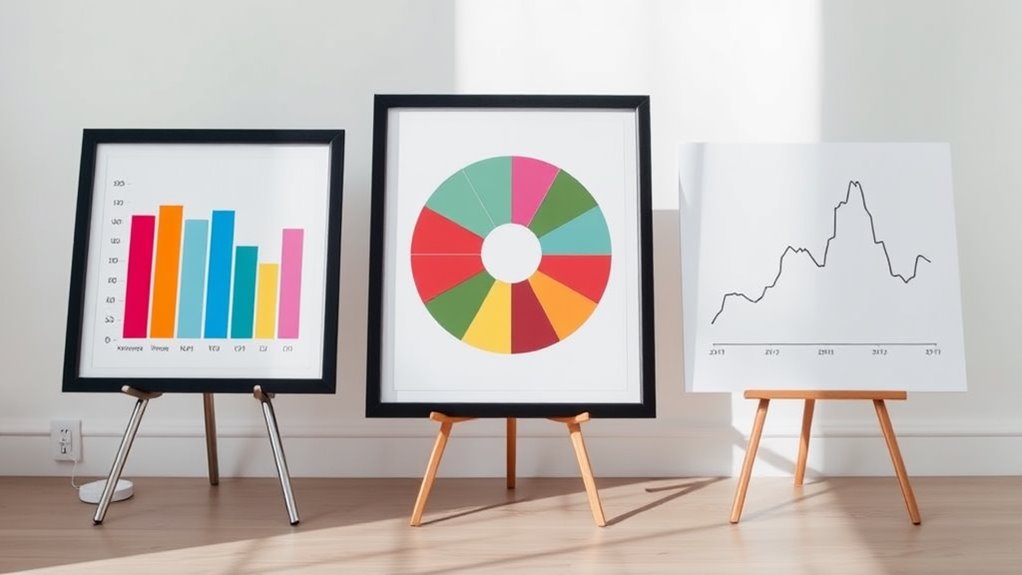
3 Charts That Changed Our Understanding of Inequality
Subtitle
The Scientific Journal for Everyone – When scientists speak human, people listen.
Summary
Economic inequality isn’t new—but how we understand it has changed dramatically in recent years. Thanks to better data, smarter visualization, and sharper analysis, some charts have not just explained inequality—they’ve reframed the entire debate.
This article highlights three landmark charts that shifted how economists, policymakers, and the public think about wealth, income, and global disparities. They reveal a world where inequality isn’t just rising—it’s structural, historical, and political.
Why It Matters
Charts may seem simple, but they can carry tremendous power:
-
They can reveal patterns hidden in data.
-
They can change narratives, challenging old assumptions.
-
They can influence policy, sparking movements and new institutions.
-
They make inequality visible, accessible, and urgent.
In a world where economic arguments often drown in jargon, these charts show that sometimes, a picture really is worth a thousand regressions.
What the Research Shows
-
Top Incomes Have Rebounded Dramatically
(Source: Piketty & Saez, 2003; updated WID.world data)
This chart shows how the top 1% share of income plummeted after World War II, then began climbing again from the 1980s onward in many advanced economies—especially the US and UK. -
The Elephant Curve of Global Inequality
(Source: Lakner & Milanovic, 2016)
This chart shows who gained most from globalization between 1980 and 2016: the global middle class (especially in Asia), and the global top 1%. The Western working class? Largely left behind. -
Wealth Is More Concentrated Than Income
(Source: Zucman, 2019; WID.world)
This chart reveals how wealth inequality has exploded even faster than income inequality. In many countries, the richest 10% own over 60–70% of total wealth, while the bottom half owns almost nothing.
These charts don’t just present data. They challenge entire ideologies—from trickle-down economics to globalization myths.
What’s Behind It
1. Better Historical Data
A generation of economists—like Thomas Piketty, Emmanuel Saez, Gabriel Zucman, and Branko Milanovic—have reconstructed long-run income and wealth series using tax data, national accounts, and new statistical techniques.
2. Global Perspective
Instead of looking only within countries, researchers began comparing across countries and across classes—revealing new insights about the winners and losers of globalization.
3. New Definitions of Inequality
It’s not just about income anymore. We now measure:
-
Wealth inequality
-
Intergenerational inequality
-
Gender and racial inequality
-
Inequality of opportunity vs. outcomes
4. Policy and Political Context
These charts emerged in a post-financial crisis world. As real wages stagnated, and housing and education costs soared, the data offered proof of what many already felt: the system was not working equally.
What’s Changing
In Academia
-
Inequality is no longer niche—it’s central.
-
Leading journals and universities now feature inequality research prominently.
-
Economists debate causes, consequences, and remedies—from tax policy to labor market reform.
In Policy
-
Institutions like the IMF, OECD, and World Bank now acknowledge that inequality harms growth and social stability.
-
Wealth taxes, universal basic income, and labor rights are on the table in ways they weren’t before.
-
EU policy debates increasingly link inequality to cohesion, resilience, and democratic legitimacy.
In Public Consciousness
-
Inequality has become a political flashpoint—fueling populism, protest, and polarization.
-
The pandemic and inflation shocks reminded the world that vulnerability is not evenly distributed.
These charts helped fuel that awakening.
Big Picture
These three charts are more than visuals—they are lenses on a changing world.
They show that inequality:
-
Did not just happen. It was shaped by policy choices and power structures.
-
Is not inevitable. Different countries have very different levels of inequality—even with similar technologies.
-
Matters beyond money. Inequality erodes trust, reduces opportunity, and threatens democracy.
In short: Good charts don’t just show us the world—they challenge us to change it.
Conclusions
Let’s summarize what these three landmark charts reveal:
1. Inequality has returned—at the top
The rise of the 1% is not just anecdotal—it’s statistically clear. Post-war equality was an exception, not the norm.
2. Globalization lifted some, but left others behind
The “elephant curve” shows that the Western working class did not benefit from global growth the way elites and emerging middle classes did.
3. Wealth inequality is more extreme than income inequality
And it is growing faster. Assets, not wages, now determine economic security.
4. Data transparency is political power
Without open data and good visualization, inequality stays hidden. These charts made it visible, legible, and actionable.
5. The future depends on response
Charts don’t fix inequality—but they help societies see what needs fixing.
The deeper lesson
Numbers can obscure—or they can reveal.
These three charts didn’t invent inequality. But they helped unmask it.
And they remind us that economics isn’t just about growth curves and interest rates.
It’s about who gets what, who decides, and who’s left behind.
Inequality is no longer invisible. What we do with that visibility is the real test.
Sources
-
Piketty, T. & Saez, E. (2003). “Income Inequality in the United States, 1913–1998.” Quarterly Journal of Economics
-
WID.world Database (2023). World Inequality Lab
-
Milanovic, B. & Lakner, C. (2016). “Global Income Distribution: From the Fall of the Berlin Wall to the Great Recession.” World Bank
-
Zucman, G. (2019). The Hidden Wealth of Nations
-
OECD (2023). In It Together: Inequality and Inclusive Growth
Q&A Section
Why is the top 1% chart so influential?
Because it visually proves that inequality isn’t a vague feeling—it’s a measurable, rising trend tied to real policy shifts.
What is the “elephant curve”?
A chart showing how global income grew from 1980–2016: the middle of the world benefited, but many in the rich world’s working class did not.
Why does wealth inequality matter more now?
Because housing, stocks, and capital ownership have outpaced wages. Owning assets—not just working—defines economic power today.
What can be done about it?
Progressive taxation, social investment, inclusive labor markets, and transparency about wealth and ownership.
Are these charts perfect?
No chart is perfect—but these are robust, replicable, and widely studied across countries and institutions.
