
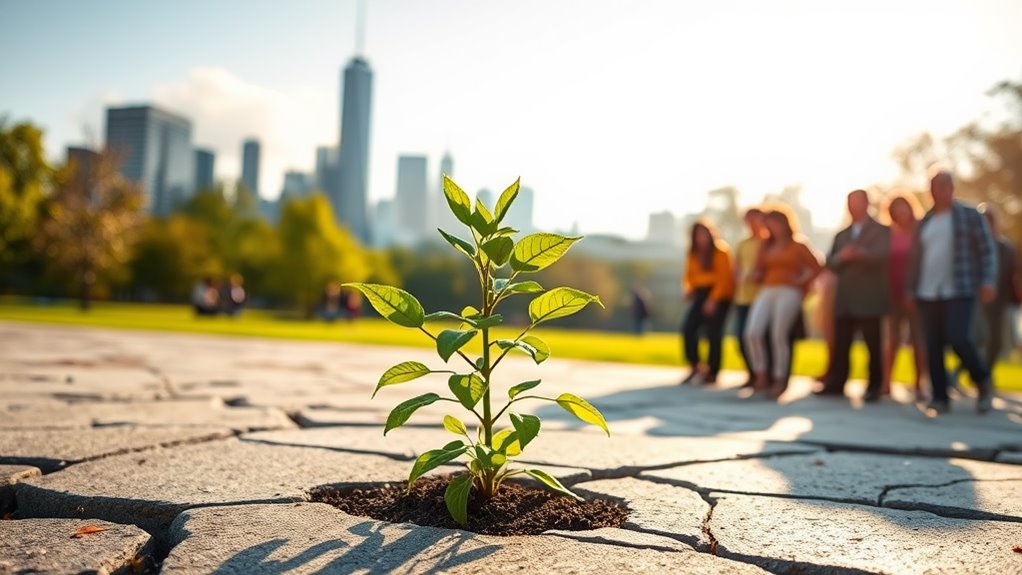
The Meaning of Resilience in 2025
Subtitle
The Scientific Journal for Everyone – When scientists speak human, people listen.
Summary
Resilience used to mean “bouncing back.” In 2025, it means something deeper, more structural, and more political. It’s about withstanding shocks—yes—but also about redesigning systems so we don’t keep breaking the same way, again and again.
From climate change and pandemics to war, inflation, and digital disruption, resilience is now the core measure of modern governance. But what does it really mean? And who gets to define it?
This article explores how resilience has moved from buzzword to benchmark—and why it’s reshaping everything from public policy to private investment.
Why It Matters
Everyone is talking about resilience—but often meaning very different things:
-
For governments, it’s about reducing vulnerabilities: to energy shocks, cyberattacks, or pandemics.
-
For businesses, it’s about supply chains, data security, and workforce stability.
-
For cities, it’s about heatwaves, floods, housing shortages, and infrastructure stress.
-
For communities, it’s about coping with inequality, displacement, and rising costs.
-
For households, it’s about surviving crisis without losing dignity.
In 2025, resilience is not just a technical goal—it’s a political question: resilience for whom, to what, and at what cost?
What the Research Shows
-
Over 80% of EU member states now reference resilience in their national plans or recovery strategies (European Commission, 2024).
-
The EU’s Recovery and Resilience Facility (RRF) allocated €723.8 billion between 2021–2026—explicitly linking resilience to green, digital, and social reforms.
-
Studies show that countries with stronger local governance, public trust, and institutional coordination recovered faster from COVID, inflation shocks, and energy crises (OECD, 2024).
-
In climate policy, “resilience” is replacing “adaptation” as the framing concept—implying proactive transformation, not just coping mechanisms (UNEP, 2023).
-
Yet resilience gaps persist: poorer regions, marginalized groups, and informal workers remain the least protected, even in wealthy economies (ILO, 2025).
The key insight: Resilience is not just about systems—it’s about structures, power, and inclusion.
What’s Behind It
Let’s unpack what resilience actually involves today:
1. Absorptive capacity
Can a system take a hit without collapsing? Think of hospitals handling a pandemic, or power grids surviving a heatwave.
2. Adaptive capacity
Can institutions learn, adjust, and change course when conditions shift? This includes social safety nets, digital governance, and urban planning.
3. Transformative capacity
Can we fix root causes—not just symptoms—so that future shocks are less damaging? This includes moving from fossil fuels to renewables, or from low-wage labor to secure work.
4. Systemic interconnectedness
Resilience must consider how finance, climate, health, housing, and migration are linked. A housing crisis weakens health resilience. Climate shocks destabilize food systems. It’s all connected.
5. Social equity
A system is not resilient if only the wealthy bounce back. True resilience means redistributing risk and resources—so that the most exposed are not left behind.
In short, resilience today is not about “returning to normal”—it’s about redefining what “normal” should be.
What’s Changing
Resilience has gone from abstract goal to concrete policy driver—shaping how governments and institutions operate.
-
In economic planning: Budgets now include resilience metrics—like fiscal buffers, supply chain diversity, and social safety nets.
-
In climate strategy: Resilience plans focus not just on coastal defenses, but on housing policy, agriculture, and community governance.
-
In digital policy: Cyber resilience includes data sovereignty, AI regulation, and tech skills for public administration.
-
In urban development: Cities invest in resilient infrastructure, green spaces, emergency housing, and climate-adaptive transport.
-
In education and labor: Lifelong learning and reskilling are framed as economic resilience tools—not just personal development.
At the same time, tensions are growing between resilience and growth, openness, and cost-cutting. Many governments struggle to fund resilience without sacrificing fiscal rules or competitiveness.
Big Picture
Resilience in 2025 is a mirror and a map. It shows us what we’ve ignored—and where we need to go.
-
It’s about making systems flexible, fair, and future-proof.
-
It’s about designing economies that can bend without breaking.
-
It’s about ensuring that crises don’t always hit the same people hardest.
-
It’s about seeing resilience as a collective investment, not a personal burden.
In short: Resilience is no longer optional. It’s the price of survival in a world of polycrisis.
Conclusions
Let’s break down what resilience really means—and what it requires:
1. Beyond bouncing back
True resilience is not recovery to the status quo—it’s building back differently, with stronger foundations.
2. From individual to institutional
Personal resilience matters—but without resilient systems (healthcare, housing, energy), people can’t thrive.
3. From reaction to redesign
Resilience is proactive: anticipating, preparing, and reshaping institutions to reduce harm before it hits.
4. From silos to systems
Crises don’t respect sector boundaries—so resilience planning must be cross-cutting, interdisciplinary, and integrated.
5. From buzzword to benchmark
The challenge is not defining resilience—it’s measuring it, funding it, and ensuring it reaches the people who need it most.
The deeper lesson
Resilience is not a luxury for rich countries.
It’s not a slogan for grant proposals.
It’s not a trait we expect individuals to embody while systems fail them.
It’s a new contract between governments and citizens: a promise that when crisis comes, you’re not on your own—and that we’re building something better, not just surviving what’s worse.
In the end, resilience is about power. And who has the right to weather the storm.
Sources
-
European Commission (2024). Recovery and Resilience Facility Implementation Report
-
OECD (2024). Resilience for Uncertain Times: From Risk to Systems Thinking
-
UNEP (2023). Climate Resilience: Beyond Adaptation
-
International Labour Organization (2025). Social Protection and Resilience in Crisis Recovery
-
Bruegel (2024). Governing for Resilience: EU Policy Lessons
Q&A Section
What’s the difference between adaptation and resilience?
Adaptation means adjusting to change. Resilience means withstanding and transforming through shocks—a broader, deeper concept.
Can a system be resilient and unjust?
Yes—and that’s a problem. Some resilient systems protect elites while excluding others. Real resilience must include fairness and access.
Is resilience the same in rich and poor regions?
No. Poorer regions face more shocks and have fewer resources. Building resilience means correcting these imbalances.
How is resilience measured?
Through indicators like health system capacity, energy security, employment buffers, and institutional trust—but metrics vary by country.
What’s next for resilience policy?
Expect more funding, more climate integration, more digital tools—and more tension between short-term costs and long-term preparedness.
