
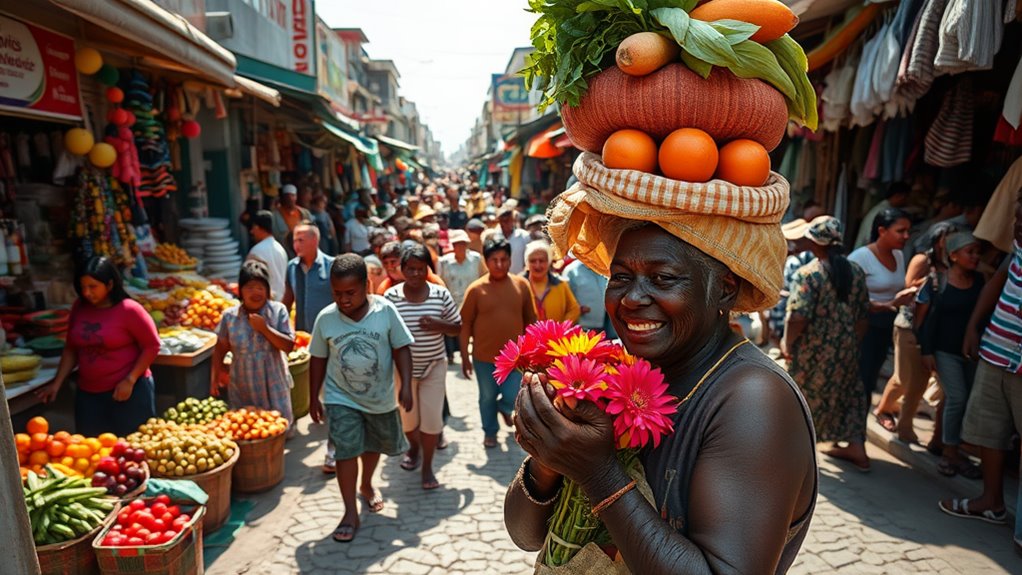
The Informal Economy: Hidden Dynamics
Subtitle
The Scientific Journal for Everyone – When scientists speak human, people listen.
Summary
Behind every official GDP figure lies another economy—unregistered, untaxed, often invisible. From street vendors and undeclared care work to under-the-table construction jobs and gig platforms in legal grey zones, the informal economy is a vast and complex force shaping societies across the globe.
Though often seen as a sign of underdevelopment, the informal economy is not just a relic of the past. In some regions, it’s growing, diversifying, and digitizing. This article explores what the informal economy really is, how it works, who depends on it, and why formalization is more complicated than it seems.
Why It Matters
The informal economy is more than a footnote to formal statistics—it is:
-
A survival strategy for millions
-
A source of innovation and resilience, especially in low-income and crisis-hit areas
-
A fiscal blind spot that undermines state capacity
-
A social risk, often associated with poor working conditions and exclusion from protections
Understanding its dynamics is crucial to shaping labor, tax, welfare, and urban policies that reflect how people actually work and live—not just how they’re recorded on paper.
What the Research Shows
1. It’s big—and persistent
-
The informal economy accounts for roughly 30% of GDP in Southern Europe, and up to 50–60% in parts of the Western Balkans and Eastern Europe (ILO, 2024).
-
In Africa, Asia, and Latin America, informality is the dominant form of employment.
-
Even in high-income countries, informality exists—in sectors like domestic work, eldercare, cleaning, and seasonal agriculture.
2. It’s not just “black markets”
Informality includes:
-
Self-employed workers without registration or contracts
-
Unreported wages paid in cash
-
Micro-enterprises operating without licenses
-
Platform work in legal and regulatory grey areas
Many informal activities are legal in nature—but simply unregulated, unprotected, or untaxed.
3. It thrives where the formal sector fails
-
High taxes, burdensome bureaucracy, and rigid labor laws often push small businesses and workers toward informality.
-
In fragile states, informal systems replace weak institutions by providing credit, jobs, and services.
-
During crises (e.g. COVID-19), informal work became a lifeline when formal jobs disappeared.
What’s Behind It
1. Structural and institutional drivers
-
Weak enforcement of tax and labor laws
-
Complex or costly registration procedures
-
Limited trust in public institutions, especially in post-transition or post-colonial contexts
-
Barriers to formal employment, including lack of education, migration status, or language skills
2. Cultural and historical legacies
-
In many societies, informality is socially embedded—passed down as family practices or community norms.
-
Informal networks provide solidarity, credit, and flexibility where the state does not.
-
In rural economies, especially, non-cash exchanges and mutual aid systems blur the line between formal and informal.
3. Digital and platform transformations
-
The rise of gig work (e.g. food delivery, online freelancing) is reshaping informality.
-
While platforms formalize some transactions, they also blur employment status and often shift risks to workers.
-
The result is a new frontier of informality—one that looks modern but lacks protections.
What’s Changing
1. Governments are trying to formalize
-
Efforts include tax simplification, digital registration tools, and incentives for small firms to go formal.
-
Some countries are offering portable benefits for gig workers or recognizing informal groups (like waste pickers) as cooperatives.
-
The EU and ILO promote transitions to formality through targeted funding and technical support.
Still, many policies fail when they ignore why people choose informal arrangements in the first place.
2. COVID-19 exposed informal vulnerabilities
-
Informal workers were hit hardest by pandemic lockdowns—often excluded from furlough schemes or unemployment support.
-
This sparked new debates on universal social protection and cash transfer programs not tied to formal jobs.
It also pushed governments to digitize benefits and registration systems—sometimes making it easier to reach the informal sector.
3. Informality is becoming a policy battlefield
-
Some argue informality undermines tax justice, labor rights, and state legitimacy.
-
Others see it as a pragmatic solution in rigid, unequal, or extractive systems.
-
The key issue is not whether informality exists—but how it is governed, integrated, or transformed.
Big Picture
The informal economy is neither a villain nor a savior.
It is a mirror—reflecting both the ingenuity of people who work without safety nets and the failures of systems that exclude them.
Efforts to reduce informality will fail if they treat it as pathology to be eliminated rather than a social and economic system with its own logic, rules, and trade-offs.
Conclusions
1. Informality is here to stay—at least for now
As long as formal systems remain inaccessible, rigid, or mistrusted, informal work will thrive.
2. Policies must be context-specific, not punitive
Formalization should be encouraged through incentives, not crackdowns—and must respect local realities.
3. Digital tools offer promise—but also new risks
Mobile payments, e-government, and digital ID can help—but only with trust, access, and safeguards.
4. Social protection must evolve
If work is informal, protection must be universal, portable, and flexible—decoupled from employer-based models.
5. Rethinking economic citizenship
Who counts as a worker? Who earns rights and protections? The informal economy challenges us to redefine economic inclusion.
The deeper lesson
The informal economy is not outside the system—it’s a vital, if invisible, part of it.
Instead of forcing people to adapt to outdated models, we need to design systems that meet people where they are—and bring them in with dignity.
Sources
-
International Labour Organization (2024). Women and Men in the Informal Economy: A Statistical Picture
-
European Commission (2023). Tackling Undeclared Work in the EU
-
OECD (2023). Informality and Inclusive Development
-
Chen, M. (2020). The Informal Economy: Definitions, Debates, and Trends
-
World Bank (2023). Digital Pathways to Formalization
Q&A Section
Is the informal economy always illegal?
No. Many informal activities are legal but unregulated or untaxed. Illegality applies more to how the activity is conducted (e.g. underreporting income).
Why don’t people formalize?
Cost, complexity, lack of trust in authorities, and fear of losing benefits often discourage formalization.
Is gig work informal?
It depends. Gig work is quasi-formal—digitally tracked but often lacking contracts, rights, or benefits. It creates a new “gray zone” of informality.
Can informality be reduced?
Yes—but only gradually, through simpler systems, real incentives, and stronger protections. Formalization is a process, not an event.
What’s the ideal policy approach?
Recognize informal work, protect those who do it, simplify formalization, and design inclusive welfare systems that don’t leave people out because of how they work.
