
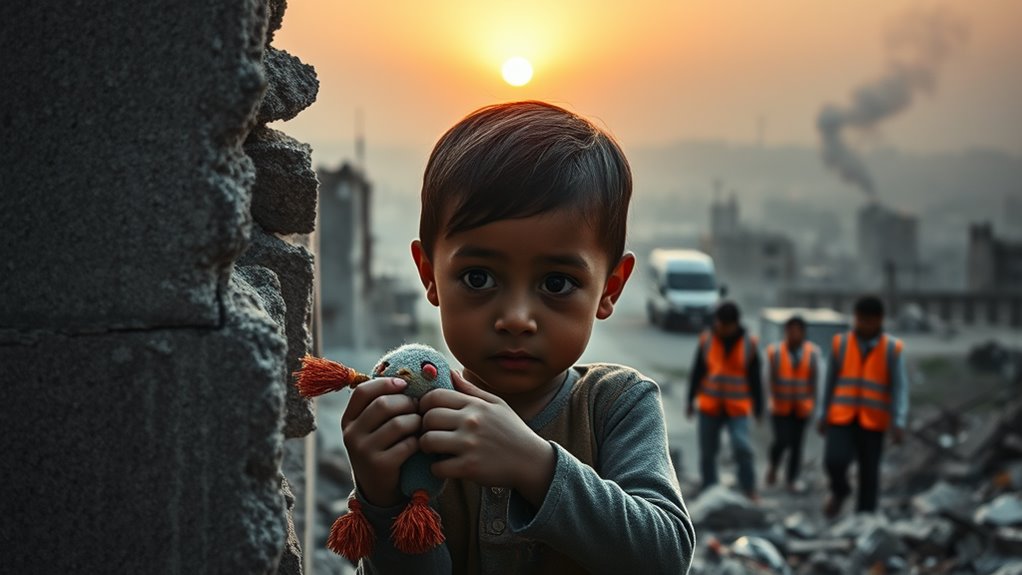
Gaza Crisis and the Future of Humanitarian Diplomacy
Subtitle
The Scientific Journal for Everyone – When scientists speak human, people listen.
Summary
The 2024–2025 Gaza crisis has become a symbol of the limits—and failures—of international humanitarian diplomacy. With thousands dead, infrastructure devastated, and humanitarian access restricted, the crisis has sparked a global reckoning:
Can international diplomacy still function in conflict zones where basic norms are ignored, aid is blocked, and civilian suffering is politicized?
This is more than a regional tragedy. It is a stress test for global norms, the credibility of the UN system, and the ability of states and NGOs to protect civilians during war.
Why It Matters
The Gaza crisis reveals the growing disconnect between international law and on-the-ground realities in modern warfare. Humanitarian diplomacy—the effort to negotiate civilian protection, aid access, and ceasefires—is under intense pressure:
-
Civilian casualties and displacement have reached record levels in Gaza
-
Access for humanitarian workers and medical supplies is blocked or delayed
-
Diplomatic consensus is elusive, even as evidence of humanitarian violations mounts
-
UN agencies are under political fire, while local NGOs are overwhelmed
-
Public opinion is polarized, weakening the political will for negotiation
In short: the crisis is redefining how (and whether) the international community can respond to civilian suffering in active war zones.
What the Research Shows
-
Civilians are increasingly the target: Over 60% of conflict-related deaths in Gaza since October 2024 have been civilians, a figure well above international thresholds for proportionality (UN OCHA, 2025).
-
Aid obstruction is now a tactical tool: Repeated delays and denials of humanitarian convoys reflect a trend where access is used as leverage, in violation of international humanitarian law (ICRC, 2025).
-
Trust in humanitarian institutions is declining: In a global poll, 48% of respondents said they believe the UN is ineffective in protecting civilians, up from 32% in 2019 (Ipsos, 2025).
-
Diplomatic paralysis is growing: The UN Security Council has failed to pass binding ceasefire resolutions, blocked by major power vetoes—eroding confidence in multilateral diplomacy (Chatham House, 2025).
-
Humanitarian actors are targeted: Over 130 aid workers have been killed in Gaza since October 2024—the deadliest conflict for UN staff in history (UNRWA, 2025).
These findings point to a deeper erosion of the norms and mechanisms that once protected civilians and enabled humanitarian access.
What’s Behind It
The Gaza crisis is not a diplomatic failure in isolation—it’s the product of long-standing structural weaknesses in global humanitarian governance.
1. Weaponization of Aid
In modern conflicts, humanitarian aid is no longer neutral. It is politicized, securitized, and contested, with both sides accusing aid groups of bias or complicity.
2. Erosion of Norms
Geneva Convention protections are increasingly flouted, with accountability mechanisms too slow, weak, or politically constrained to enforce consequences.
3. Crisis Fatigue and Selective Empathy
Global audiences and donors are overwhelmed by multiple crises—from Ukraine to Sudan to climate disasters—leading to inconsistent attention and funding.
4. UN Structural Dysfunction
The Security Council is gridlocked. The humanitarian coordination system is underfunded and overstretched. Key agencies are caught between neutrality and political survival.
5. Collapse of the Two-State Framework
Without a credible peace process, humanitarian diplomacy is operating in a vacuum, unable to separate short-term aid from long-term political solutions.
These dynamics reveal why even experienced diplomats and aid professionals are struggling to secure basic humanitarian corridors or pauses in fighting.
What’s Changing
The Gaza crisis has triggered a wave of reflection—and resistance—within the humanitarian and diplomatic communities:
-
New actors are stepping in: Qatar, Egypt, and regional NGOs have taken on front-line diplomatic and logistical roles, filling gaps left by multilateral bodies.
-
Legal action is expanding: Multiple international courts have launched investigations into potential war crimes and violations of humanitarian law—though enforcement remains uncertain.
-
Donor politics are shifting: Some Western states have suspended funding to UN agencies, while others are doubling down on local, apolitical humanitarian initiatives.
-
Humanitarian innovation is emerging: New tools, from AI-assisted logistics to blockchain for aid tracking, are being tested under extreme conditions to deliver more securely and transparently.
-
Public pressure is growing: Protests and advocacy campaigns in Europe, the U.S., and the Global South are demanding both aid delivery and political accountability.
But these changes are not enough—without structural reform, humanitarian diplomacy risks becoming symbolic rather than effective.
Big Picture
Gaza is a humanitarian tragedy. But it’s also a crisis of the humanitarian system itself.
-
If diplomacy cannot protect civilians in Gaza, where can it?
-
If aid can be blocked or manipulated, what becomes of neutrality?
-
If international norms are ignored, what replaces them?
In short: Gaza is not just a battleground—it is a warning sign for the future of conflict response.
Conclusions
To protect humanitarian diplomacy from collapse, the international community must confront hard truths—and act on them.
1. Humanitarian aid must be protected by design, not by goodwill
This means enforcing international law with real accountability, including sanctions or prosecutions for obstruction of aid.
2. The UN system needs reform and reinforcement
Security Council deadlock cannot be the norm. Independent mechanisms, regional frameworks, or emergency workarounds must fill the vacuum when global governance fails.
3. Neutrality must be rebuilt through transparency
Aid groups must be clear, data-driven, and visibly impartial, using technology and local partnerships to rebuild trust with communities and combatants.
4. Diplomacy must link aid to long-term solutions
Humanitarian access cannot be a substitute for peacebuilding. Future diplomacy must integrate conflict resolution, justice, and post-crisis reconstruction.
5. Civil society and new coalitions must lead
If states fail to act, citizens, networks of cities, and professional organizations must push for new norms—creating pressure from the ground up.
The deeper lesson
Gaza is not just a test of political will. It’s a test of what kind of world we are willing to build—or abandon.
If humanitarian diplomacy dies in Gaza, it may die elsewhere too. But if it can be revived—through courage, accountability, and innovation—it could become stronger, faster, and fairer than the broken systems it must replace.
The stakes could not be higher. This is not only about aid. It is about who we choose to be in the face of suffering.
Sources
-
UN OCHA (2025). Gaza Humanitarian Impact Report
-
ICRC (2025). Humanitarian Access Trends
-
Ipsos Global Trust Barometer (2025)
-
Chatham House (2025). Diplomatic Paralysis and Conflict Mediation
-
UNRWA (2025). Humanitarian Worker Casualty Reports
-
Geneva Academy (2024). International Humanitarian Law in Protracted Conflicts
Q&A Section
What is humanitarian diplomacy?
It’s the effort to negotiate for safe, impartial aid access and protection of civilians during war—between states, NGOs, and international bodies.
Why can’t the UN stop the fighting?
The UN Security Council is often paralyzed by veto powers of its five permanent members, especially when national interests conflict.
Isn’t aid neutral by definition?
In principle, yes. But in practice, aid is often seen as political, especially when it involves territory, border control, or media visibility.
What happens if humanitarian norms collapse?
If neutrality, access, and protection break down, conflicts become more brutal and protracted, with higher civilian death tolls and fewer diplomatic exit ramps.
Can local actors do better?
Yes—and often do. Local NGOs and communities often have the trust and access that international groups lack. Empowering them is essential.
