
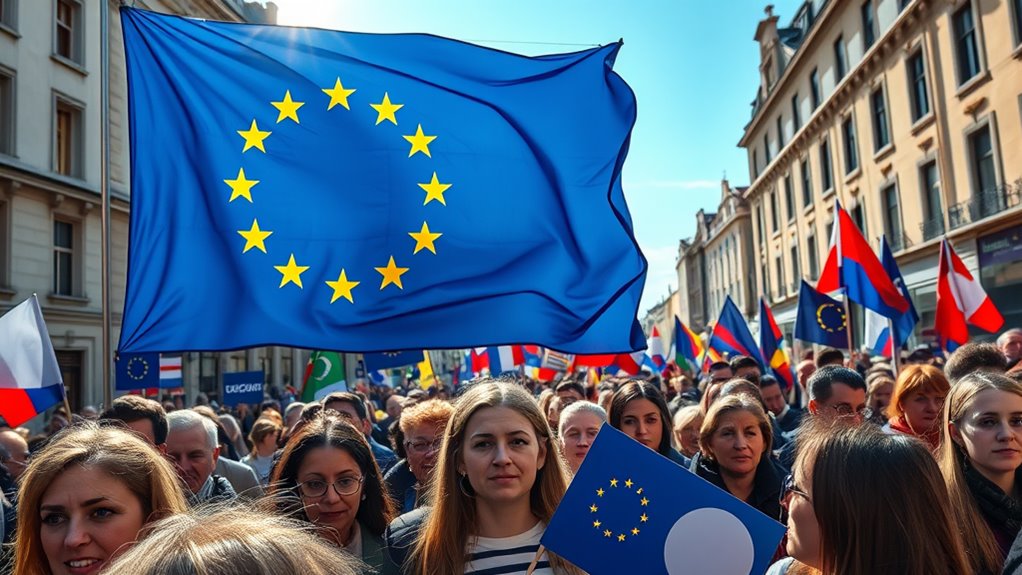
European Elections 2024: What’s at Stake for the EU?
Subtitle
The Scientific Journal for Everyone – When scientists speak human, people listen.
Summary
The June 2024 European Parliament elections are more than a democratic ritual—they are a strategic inflection point. With growing fragmentation, rising populism, and urgent policy questions on climate, digital regulation, migration, and defense, the next EU Parliament will shape the Union’s identity, governance, and global role for years to come.
The outcomes of these elections will determine not only who governs, but also how the EU evolves: deeper integration or cautious retrenchment? Green ambition or industrial pragmatism? Rule-of-law enforcement or political compromise?
Why It Matters
Every five years, more than 400 million EU citizens are invited to vote for the Members of the European Parliament (MEPs). While often overlooked, this electoral process is critical because:
-
MEPs co-legislate on 70–80% of EU laws, including major files on the Green Deal, digital economy, defense, agriculture, and fiscal governance.
-
The balance of power in Parliament shapes coalitions—centrist, green, nationalist, or leftist—each with different priorities and red lines.
-
Parliamentary outcomes affect executive leadership via the Spitzenkandidaten (lead candidate) process, influencing who becomes President of the European Commission.
-
Turnout levels signal legitimacy: High youth and minority engagement could tilt results toward progressive coalitions; low turnout empowers extremes.
At stake is not just the legislative agenda—but the very legitimacy and direction of European integration.
What the Research Shows
-
Turnout is rising but uneven: After a low of 42.6% in 2014, voter turnout reached 50.6% in 2019. However, gaps persist: youth, low-income, and rural voters remain underrepresented (European Parliament, 2020).
-
Right-wing populist parties are growing: Nationalist, Eurosceptic, and anti-immigration parties captured over 30% of seats in 2019 and may expand further, especially in Italy, France, and Germany (Falter et al., 2023).
-
Young voters prioritize climate and digital rights: In the 18–24 demographic, 65% cite environmental concerns as key to their vote—but only 42% turned out in 2019 (Eurobarometer, 2023).
-
Even small shifts change policy outcomes: A 5% swing in seats can mean the difference between advancing or blocking climate regulation, such as the Carbon Border Adjustment Mechanism or the AI Act (Thomson et al., 2022).
-
Coalition complexity is increasing: The traditional center-left and center-right blocs no longer hold a majority alone—multi-party negotiations now shape most major decisions (Bruegel, 2023).
Together, this evidence shows the stakes are not just ideological—they are institutional and operational.
What’s Behind It
Understanding the dynamics of the European elections requires a look at how the system is built and how politics flows across national and supranational lines.
1. Proportional Representation and Fragmentation
Each EU country runs its own election using proportional representation, meaning small parties can win seats. This encourages diversity—but also fragmentation, complicating majority formation.
2. National Campaigns, European Consequences
Despite being an EU-wide election, campaigns are mostly national in focus. Local issues dominate, and party positions on European matters are often vague—leading to a disconnect between national narratives and EU policy outcomes.
3. Spitzenkandidaten and Institutional Tension
The lead-candidate process, designed to link elections with Commission leadership, remains contested. While the Parliament wants more say in appointing the Commission President, the European Council often overrides, creating a democratic ambiguity.
4. Media Fragmentation and Information Asymmetry
There is no EU-wide public sphere. Most citizens receive election information from national media, which may not explain how Parliament works—or why their vote matters at the European level.
5. Crisis Politics as a Background Constant
The last five years have seen COVID-19, war in Ukraine, energy shocks, inflation, and migration surges. These compound crises shape electoral sentiment, often driving voters toward populist or anti-establishment platforms.
In essence, the EU is attempting to hold elections for a shared future using tools built for the past.
What’s Changing
The 2024 elections occur in a dramatically different environment from previous cycles:
-
Climate action is facing a political backlash: Farmers’ protests, high energy costs, and industrial competitiveness fears are fueling opposition to green legislation in multiple member states.
-
Migration remains a political flashpoint: Despite new asylum pacts, public anxiety over border control and integration continues to drive support for nationalist parties.
-
Digital sovereignty debates are intensifying: With the DSA and AI Act in motion, parties disagree sharply on privacy, innovation, and tech industry regulation.
-
Defense and geopolitics now top the EU agenda: Russia’s war in Ukraine has shifted attention to EU military coordination and strategic autonomy, areas where Parliament’s role is growing but contested.
-
Budget negotiations loom large: The 2028–2034 Multiannual Financial Framework (MFF) will be shaped by the new Parliament, determining spending on cohesion, climate, research, and defense.
These elections will decide not just who holds power—but what policy is even possible in the next decade.
Big Picture
The European Parliament elections are more than a reflection of voter preferences. They are a test of:
-
Whether European democracy can mobilize meaningfully
-
Whether coalition politics can deliver action
-
Whether the EU can adapt its structure to new geopolitical realities
-
Whether integration is still a project of hope—or merely of necessity
In short: This election is a referendum on Europe’s future—federal or fragmented, green or grey, open or closed.
Conclusions
As the EU navigates one of its most volatile periods in recent history, the 2024 elections offer a chance to reset direction and rebuild trust—but also pose serious risks of drift or deadlock.
1. Legitimacy through Participation
Turnout, especially among youth and marginalized groups, is not just about numbers—it’s about democratic credibility. Low participation empowers minority agendas that distort consensus policy.
2. Coalition Chess Will Determine Outcomes
The EPP, S&D, Renew, Greens, and Left will need to build flexible alliances—or see reforms stall. Compromise will be key, especially on climate, budget, and defense.
3. Policy Pathways Will Narrow or Expand
A Parliament leaning green-progressive may push bold climate and social protections. A tilt toward national-conservative forces could delay or reverse key EU legislation.
4. Institutional Balance Is at Stake
The future of the Spitzenkandidaten process, the role of the Parliament in budget oversight, and even treaty reform discussions will hinge on political alignment within the new assembly.
5. Integration vs. Fragmentation
The EU faces a crossroads: deepen cooperation on defense, fiscal tools, and migration—or allow national vetoes and internal divisions to paralyze decision-making.
The deeper lesson
These elections are not just about who wins seats—they are about whether Europe can govern itself effectively in a more dangerous, digital, and divided world.
If the Parliament emerges fractured, expect gridlock and short-termism. But if new coalitions form with a shared vision, the EU could emerge stronger, greener, and more globally relevant.
In 2024, Europe votes not just on policy—but on the very possibility of political union.
Sources
-
European Parliament. (2020). Post-Election Analysis of Turnout
-
Falter, J. W., et al. (2023). Populist Movements in the European Parliament
-
Eurobarometer. (2023). Youth Priorities and Political Engagement
-
Thomson, R., et al. (2022). Legislative Dynamics in EU Co-Decision Processes
-
Bruegel. (2023). Coalition Formation in the EU Parliament
-
Politico. (2024). Poll of Polls: European Elections
Q&A Section
Why does voter turnout matter so much in EU elections?
Because it determines whether the EU reflects broad citizen interests or narrow political extremes. Low turnout leads to unbalanced representation.
Can the EU Parliament really make laws?
Yes. It co-legislates with the Council on most issues—from climate to digital to budgetary frameworks.
What is the Spitzenkandidaten process?
A system where parties nominate lead candidates for Commission President. Parliament supports one—but the Council has the final say, creating democratic tension.
Is a far-right majority possible?
Unlikely, but a larger populist-right bloc could block key legislation, especially on green transition and migration.
What happens after the vote?
Party groups negotiate committee leadership, legislative priorities, and coalition deals—and the EU gears up for budget negotiations and Commission appointments.
