
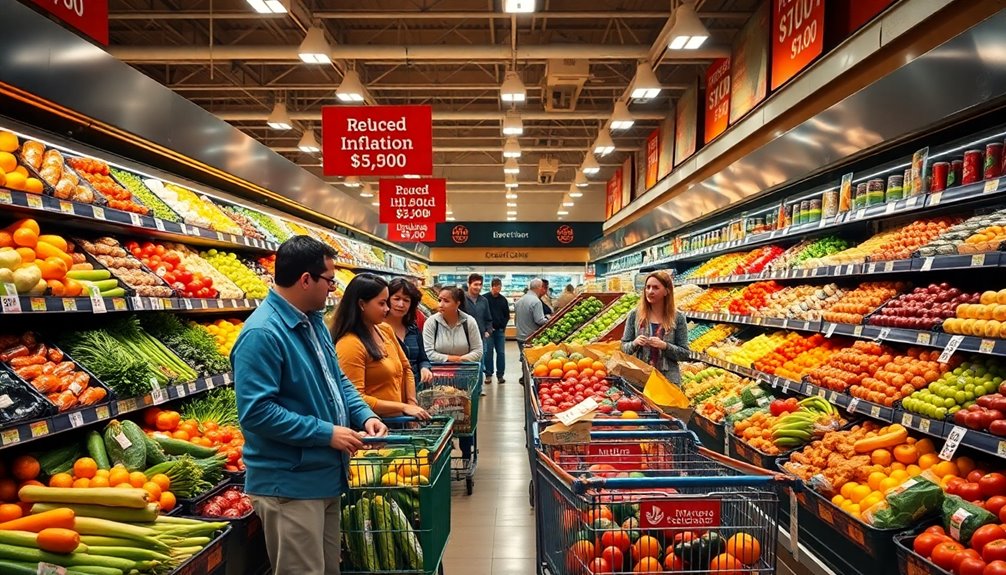
Why Grocery Prices Stay High Even as Inflation Falls
Subtitle
The Scientific Journal for Everyone – When economists speak human, people listen.
Summary
Shoppers across Europe are noticing the same puzzling pattern: the official inflation rate is falling, but grocery bills remain stubbornly high. Even staples like bread, milk, and pasta that drove last year’s price surge haven’t returned to pre-crisis levels.
This “price stickiness” isn’t a statistical illusion—it’s the product of how supply chains, corporate pricing strategies, and consumer behavior interact after a shock. Once food prices are pushed up by higher energy, fertilizer, and transport costs—as they were in 2022–2023—they rarely reset downward quickly, even when those pressures ease.
In 2025, falling headline inflation means prices are rising more slowly, not that they’re falling. And in the grocery aisle, structural costs, market concentration, and climate-related disruptions are keeping those prices elevated.
Why It Matters
-
Cost of living remains under strain: Food takes a larger share of low-income households’ budgets, so persistent high prices deepen inequality.
-
Policy credibility at stake: Central banks can tame inflation rates without restoring affordability—fueling political discontent.
-
Signals structural challenges: Price stickiness in essentials hints at deeper vulnerabilities in Europe’s food supply chain.
-
Affects health outcomes: Rising costs push consumers toward cheaper, less nutritious food, with long-term public health costs.
What the Research Says
-
Inflation measures growth rates, not absolute prices
-
Even when CPI food inflation falls from 15% to 3%, the price level is still higher than before—unless it goes negative for sustained periods.
-
-
Upward cost shocks are “sticky” in reverse
-
Energy, fertilizer, packaging, and logistics costs spiked during the pandemic and Ukraine war; when these inputs got cheaper, many contracts and shelf prices didn’t revert. Economists call this downward price rigidity.
-
-
Market concentration amplifies persistence
-
In some countries, a handful of supermarket chains dominate, reducing competitive pressure to cut prices quickly. Oligopolistic markets can sustain high margins once consumers have adapted.
-
What’s Behind It
-
Lagged supply contracts
-
Food processors and retailers often sign forward contracts for inputs. When wholesale prices drop, it can take months before that filters through to consumer prices.
-
-
Climate and harvest shocks
-
Extreme weather in Spain, Italy, and Greece has disrupted vegetable, olive oil, and fruit harvests, keeping certain categories expensive even after global commodity prices eased.
-
-
“Greedflation” and margin recovery
-
Some firms have used the cover of high inflation to rebuild margins eroded in the crisis. Studies from the ECB and OECD suggest corporate profits accounted for a significant share of price increases in 2023–24.
-
What’s Changing
-
Policy scrutiny
-
Competition authorities in France, Spain, and Greece are investigating food pricing practices, particularly in staples like milk, pasta, and oil.
-
-
Private-label dominance
-
Consumers are trading down to supermarket own-brands, which now account for over 40% of grocery spending in some EU states—pressuring branded goods producers but not always lowering prices overall.
-
-
Digital price tracking
-
Price-comparison tools and supermarket apps are improving consumer transparency, but have mixed effects—sometimes triggering price alignment rather than competition.
-
Big Picture
Falling inflation is not the same as falling prices. Grocery price stickiness shows the limits of macroeconomic stabilization for household welfare. Breaking that inertia requires structural competition reforms, targeted subsidies for healthy foods, and resilience investment in agriculture. Without these, lower inflation rates may do little to ease the cost-of-living crisis.
Conclusions
-
Headline inflation hides price persistence—low inflation can still mean record-high grocery bills.
-
Downward rigidity is structural—input costs fall faster than shelf prices.
-
Competition matters—market concentration slows price pass-through.
-
Climate volatility is now a baseline risk for agricultural pricing.
-
Policy tools must target affordability, not just stability.
The Deeper Lesson
Inflation is a rate; affordability is a reality. Until food systems are more competitive, climate-resilient, and transparent, shoppers will keep asking why their baskets cost more—even when the charts say “prices are under control.”
Sources
-
European Central Bank (2024) – Corporate Profits and Inflation in the Euro Area
-
OECD (2024) – Price Formation and Market Concentration in Food Retail
-
Eurostat (2024) – HICP Food Price Index
-
FAO (2024) – Food Price Monitoring and Analysis
-
National competition authority reports: France (DGCCRF), Spain (CNMC), Greece (HCC)
Q&A
Why don’t prices fall when inflation drops?
Because inflation measures how fast prices change, not whether they go down. Prices often stay high unless there’s deflation.
Is “greedflation” real?
Evidence suggests corporate profits did contribute to food price persistence post-2022, alongside structural and climate factors.
Do supermarket own-brands lower costs?
Sometimes—but they can also reinforce price clustering across retailers.
What role does climate change play?
Extreme weather is disrupting harvests, adding volatility and upward pressure to certain food categories.
Can policy force prices down?
Short-term caps are rare and risky; structural competition reforms and supply-side investments are more sustainable.
