
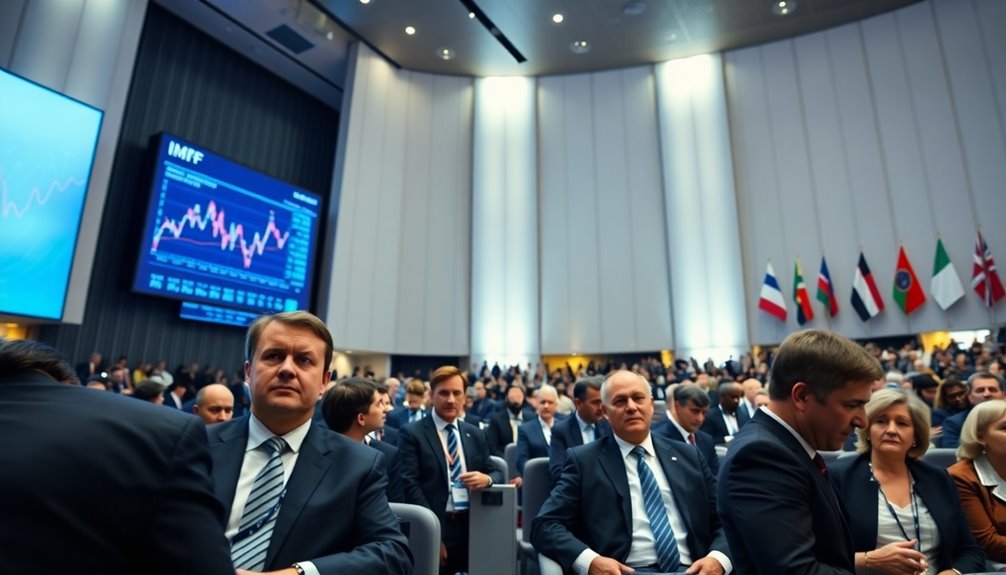
The IMF in 2025: Still Global Stabilizer or Political Pawn?
Subtitle
The Scientific Journal for Everyone – When scientists speak human, people listen.
Summary
In a world shaped by inflation shocks, sovereign debt distress, climate-linked crises, and political fragmentation, the International Monetary Fund (IMF) finds itself at a crossroads.
Once seen as the global economy’s steady hand, the IMF in 2025 faces growing criticism: Is it upholding stability across nations, or has it become a battleground for geopolitical influence?
This article examines how the IMF’s mission is evolving, why it’s under pressure, and what’s at stake when global institutions navigate political crosscurrents during a time of economic upheaval.
Why It Matters
The IMF is more than a lender. It shapes how nations budget, borrow, and reform. Its advice carries weight, especially in times of crisis. But:
-
Emerging economies are pushing back against perceived Western dominance.
-
Major powers are weaponizing economic tools — and expect multilateral institutions to pick sides.
-
Critics say the Fund has expanded its mission too far — from fiscal stability into climate, gender, and governance.
As global debt hits $315 trillion and a quarter of low-income countries face distress, how the IMF operates — and for whom — affects the entire global economy.
What the Research Says
1. The IMF’s Role Has Expanded — And That’s Contested
Traditionally focused on monetary policy, fiscal balance, and exchange rates, the IMF has increasingly engaged with broader structural issues — from climate resilience to gender inequality and governance.
-
The Fund launched the Resilience and Sustainability Trust (RST) in 2022 to support climate and pandemic preparedness.
-
It now includes climate risk and equity concerns in its surveillance reports.
-
Critics from both the right and left have called this “mission creep.”
-
U.S. Treasury officials in 2025 called on the Fund to “refocus on its core mandate.”
-
Others argue that climate, fragility, and inequality are core to financial sustainability in the 21st century.
-
2. Lending Is Political — Even When It Pretends Not to Be
The IMF says it offers “technocratic” advice. But data shows that:
-
Countries closely aligned with major shareholders (notably the U.S.) receive more favorable terms and faster disbursements.
-
Structural adjustment programs often reflect the preferences of dominant voting blocs — sometimes ignoring local context or democratic input.
-
Conditionalities are often framed as economic, but have political implications — from pension reform to anti-corruption laws.
3. Surveillance and Ratings Still Shape Sovereign Futures
IMF forecasts, Article IV reports, and debt sustainability assessments heavily influence:
-
Market perceptions and access to capital
-
Credit ratings by agencies like Moody’s and S&P
-
Policy space for governments under pressure
These tools are powerful — and have faced criticism for underestimating growth in the Global South or applying one-size-fits-all policy advice.
What’s Behind It
1. The IMF’s Voting Structure Is Outdated
-
The U.S. holds over 16% of the voting power — enough to veto key decisions.
-
European countries collectively maintain disproportionate influence relative to current GDP and population.
-
China, India, Brazil, and African nations have repeatedly called for a “rebalancing” of quotas and governance.
Despite promises, quota reform has been slow — fueling perceptions of IMF bias.
2. Geopolitical Rivalries Are Seeping Into Multilateralism
-
The rise of BRICS+, alternative development banks (like the New Development Bank), and regional funds has fragmented the global financial safety net.
-
Countries under U.S. or EU sanctions now view the IMF as part of a Western-aligned architecture.
-
In 2025, tensions over Ukraine, Taiwan, and sanctions policy have made neutrality harder to sustain.
3. Debt Crises Are More Complex Than Ever
-
Sovereign debt today is split between multilateral, bilateral (e.g., China), and private creditors — with no unified framework for resolution.
-
The IMF plays a central role in organizing relief — but its power is limited without full buy-in from all creditors.
-
Recent debt restructurings in Zambia, Sri Lanka, and Ghana show how geopolitics and fragmentation delay resolution.
What’s Changing
1. Greater Transparency — But Uneven Accountability
-
The IMF publishes detailed country reports and consults with stakeholders — but civil society groups say local voices remain peripheral.
-
Some reforms to social spending tracking and gender budgeting are underway — but critics say they’re often cosmetic.
2. More Tailored Programs — But Old Assumptions Remain
-
Newer IMF loans, such as under the RST or food shock windows, aim to be more responsive.
-
But austerity measures — spending cuts, subsidy removals — still feature prominently in many standby arrangements.
3. Growing Pressure from Emerging Economies
-
Calls for quota reform, regional alternatives, and greater say in IMF policy are growing.
-
The G24 and BRICS have proposed changes to how SDRs (Special Drawing Rights) are allocated and rechanneled.
Whether the Fund adapts or ossifies will shape its future.
Big Picture
The IMF was born from the ashes of war, designed to promote stability through cooperation. In 2025, it operates in a fractured, fast-changing world — one where economic shocks are tied to climate, technology, and conflict.
Its legitimacy hinges on whether it can:
-
Balance technical expertise with democratic accountability
-
Address 21st-century risks while retaining credibility
-
Rebuild trust across an increasingly multipolar landscape
Conclusions
1. The IMF is still essential — but fragile
It remains the global fire department for financial crises. But its hoses are tangled in politics.
2. Neutrality is not the same as silence
Staying relevant means recognizing how power dynamics influence policy — and building safeguards to protect impartiality.
3. Reform is overdue
Without governance reform, the IMF risks becoming sidelined by rising alternatives — or worse, distrusted by the very countries it aims to support.
4. Its future depends on legitimacy, not just liquidity
Credibility is a currency. And right now, the IMF is in a credibility deficit.
The Deeper Lesson
Stability isn’t just about spreadsheets. It’s about fairness, transparency, and representation.
The IMF can’t be both neutral arbiter and tool of powerful nations. It must choose: reform to reflect a new global reality — or risk becoming irrelevant in the one that’s coming.
Sources
-
International Monetary Fund (2024). World Economic Outlook: Rebuilding Resilience.
-
Ghosh, J. (2023). “The IMF and the Politics of Adjustment.” Development & Change.
-
Bretton Woods Project (2025). The IMF’s Resilience Agenda: Real Progress or Rhetorical Pivot?
-
Reuters (2025). “U.S. Urges IMF to Refocus on Core Mission Amid Climate Push.”
-
Center for Global Development (2024). Debt Transparency and the IMF’s Role.
-
Brookings Institution (2023). Reforming IMF Governance: Options for the 21st Century.
Q&A Section
Is the IMF politically neutral?
In theory, yes. In practice, its policies often reflect the influence of its major shareholders.
Why does voting power matter?
Voting power determines who sets priorities, approves loans, and influences governance — making reform critical for global equity.
Has the IMF changed since COVID?
Yes. It introduced new tools for resilience and sustainability, but remains tied to traditional macroeconomic policy frameworks.
What are the main criticisms?
Mission creep, outdated governance, one-size-fits-all reforms, and perceived bias toward creditor nations.
What reforms are needed?
Quota redistribution, stronger engagement with borrower nations, and greater flexibility in crisis response mechanisms.
