
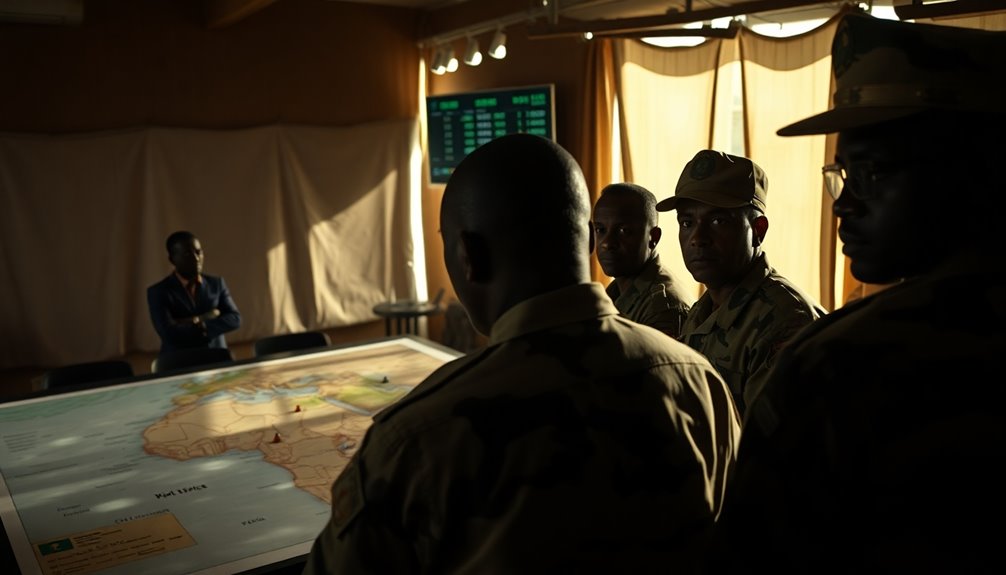
Niger Coup Fallout: What It Means for Regional Security and Energy Exports
Subtitle
The Scientific Journal for Everyone – When scientists speak human, people listen.
Summary
On July 26, 2023, Niger’s democratically elected president was overthrown in a military coup—the fifth such upheaval in West Africa since 2020. While international media reacted swiftly, coverage often focused narrowly on democracy or sanctions.
What’s been less discussed is how this political shift ripples through two vital systems: regional security architecture and global energy flows.
This article explores how Niger’s coup is more than a domestic crisis. It marks a pivotal moment for Sahelian stability, Western alliances, and global uranium and oil markets.
Why It Matters
Niger is often dismissed as geopolitically peripheral. But its strategic weight is growing—because of:
-
Location: A bridge between North and Sub-Saharan Africa
-
Security role: Host to U.S., French, and EU military operations against jihadist insurgents
-
Natural resources: A key supplier of uranium to Europe and emerging oil exporter
-
Regional leadership: Previously seen as a democratic anchor in the Sahel
Its destabilization carries real costs:
-
Terrorist groups may gain ground, threatening fragile neighbors like Mali, Burkina Faso, and Nigeria
-
Energy markets face disruption, especially amid EU efforts to diversify away from Russia
-
Multilateral institutions (AU, ECOWAS, EU, UN) must reckon with declining leverage
What the Research Says
1. Coups are rising—and reshaping alliances
A 2023 African Governance Report by Mo Ibrahim Foundation notes:
-
Six West African coups occurred from 2020–2023, reversing two decades of democratization
-
Military juntas now govern Mali, Burkina Faso, Guinea, and Niger
-
These juntas increasingly align with Russia (Wagner Group), not France or the U.S.
This signals a geostrategic realignment in the Sahel—away from the West.
2. Niger’s uranium is critical to EU energy security
According to Euroatom Supply Agency (2023):
-
Niger provides over 20% of the EU’s uranium imports
-
It is the second-largest supplier after Kazakhstan
-
France’s EDF relies heavily on Niger’s uranium for nuclear power
Even though markets have stockpiles, prolonged instability threatens supply chains and price stability.
3. Insurgencies thrive on political instability
The Armed Conflict Location & Event Data Project (ACLED) finds:
-
Militant attacks rose 32% in Niger’s Tillabéri and Diffa regions after the coup
-
Islamist groups exploit military takeovers to regroup and expand
-
Civilian displacement and food insecurity are increasing
Without a legitimate, coordinated state response, violence will escalate.
What’s Behind It
1. Perceived failure of democracy
Many Nigeriens, especially in rural areas, saw the civilian government as:
-
Corrupt and disconnected
-
Failing to deliver security against jihadist attacks
-
Closely aligned with France, which is increasingly unpopular in the region
This made the military’s narrative of “taking back control” resonate with some segments of the population.
2. Shifting global influence in Africa
-
The U.S. and EU condemned the coup and suspended aid (~$500M)
-
France was forced to withdraw troops and its ambassador
-
Russia (via Wagner) offered rhetorical and indirect support to the junta
-
China maintained silence—focused on safeguarding its mining investments
Africa is becoming a battleground for competing geopolitical models—not just resources.
3. Energy geopolitics in flux
The EU, seeking energy independence from Russia, had begun diversifying sources for:
-
Uranium (for nuclear power)
-
Oil (via Niger’s new pipeline to Benin, completed in 2023)
A prolonged crisis in Niger throws that strategy into question—especially as Nigeria’s instability also raises concerns.
What’s Changing
1. A new anti-Western bloc is emerging
Mali, Burkina Faso, and Niger have formed a military alliance and exited ECOWAS. Their rhetoric stresses:
-
Sovereignty
-
Anti-colonialism
-
Rejection of “Western interference”
This signals the weakening of regional institutions like ECOWAS and a growing vacuum of governance.
2. Energy exporters are becoming chokepoints
-
Niger’s Agadem oil fields were expected to export 90,000 barrels/day
-
The Benin-Niger oil pipeline is now at risk, amid border disputes and sanctions
-
Uranium shipments face logistical and insurance delays due to instability
Markets have priced in moderate risk—but prolonged disruption could rattle supplies and raise prices, especially if other producers (e.g. Kazakhstan) falter.
3. International response is fragmenting
-
ECOWAS threats of intervention fizzled due to lack of consensus
-
The AU has been cautious
-
The EU is walking a tightrope—balancing sanctions with energy needs
-
The U.S. has scaled back its military presence in Niger
In essence, no actor has a clear or credible path forward—and the coup may stick.
Big Picture
The fallout from Niger’s coup reveals three global truths:
-
Democracy is retreating in fragile states
-
Strategic minerals and energy are now foreign policy drivers
-
Old alliances are breaking down—without clear replacements
Niger isn’t just a crisis—it’s a test case for the future of African sovereignty, Western influence, and the energy-security nexus.
Conclusions
1. Niger’s crisis is regional—and systemic
It weakens security coordination, emboldens insurgents, and undermines democratic norms in a critical corridor.
2. The EU faces an energy-security dilemma
It must balance principled sanctions with dependence on Niger’s uranium and oil—no easy feat amid ongoing climate and energy transitions.
3. Geopolitical realignment is accelerating
Russia’s influence is growing; France’s is fading. China is watching. The U.S. is recalibrating. Africa is not just a stage—it’s becoming a strategic player.
4. Energy exports from fragile states are inherently risky
The Niger case shows that even diversified supply chains are vulnerable if they run through politically unstable corridors.
5. Development without trust is unsustainable
Billions in aid and security assistance to Niger failed to deliver legitimacy. Going forward, development must be more inclusive, transparent, and locally rooted.
The Deeper Lesson
You can’t build energy security or regional stability on shaky political ground.
Until global powers treat African partners as equals—rather than clients or conduits—these crises will repeat.
Niger is not just a headline. It’s a turning point.
Sources
-
Euroatom Supply Agency (2023). Nuclear Fuel Report
-
Mo Ibrahim Foundation (2023). African Governance Index
-
ACLED (2024). Conflict Monitoring in the Sahel
-
International Crisis Group (2024). The Future of the Sahel After Niger
-
IMF (2023). Niger Country Economic Outlook
-
EU Commission (2024). Strategic Raw Materials and Africa
Q&A Section
Is Niger still exporting uranium?
Yes, but disruptions and political risk premiums have increased. Some shipments are delayed; others continue under renegotiated terms.
Why didn’t ECOWAS intervene?
Military and political divisions, public opposition, and logistical constraints made intervention politically risky and militarily uncertain.
How is France affected?
It has lost a key ally and base in the Sahel. Its long-standing role in Francophone Africa is facing collapse amid rising anti-French sentiment.
Can sanctions work?
Only if coordinated and accompanied by credible diplomatic paths forward. So far, isolation is hardening the junta’s resolve.
Is this a wider African trend?
Yes. Several states are questioning Western influence, reassessing alliances, and reasserting sovereignty—sometimes at the expense of democratic governance.
