
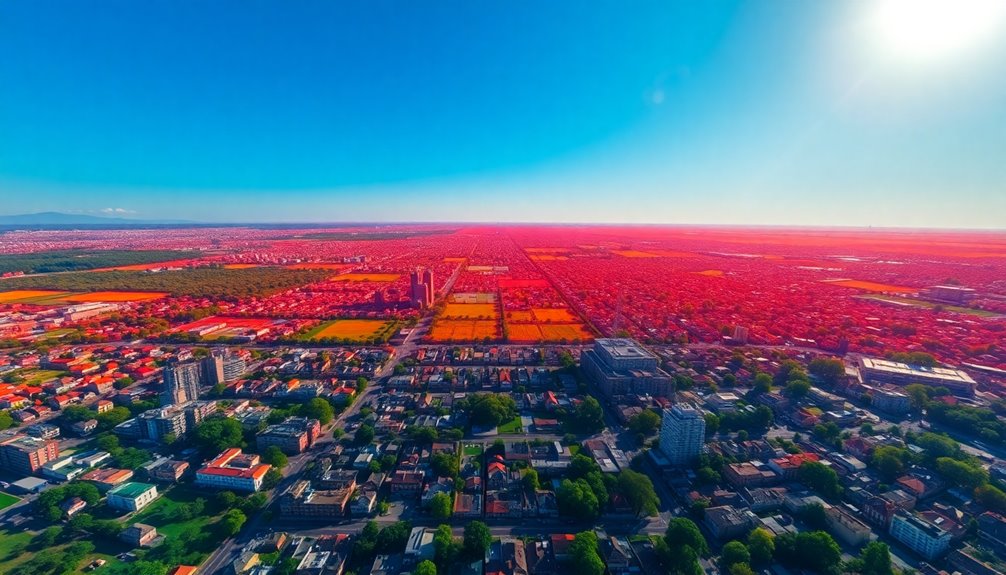
Mapping Urban Heat Islands: A Doctoral Dive Into Climate Inequality
Subtitle
The Scientific Journal for Everyone – When scientists speak human, people listen.
Summary
Cities are heating up—but not evenly.
Urban Heat Islands (UHIs), zones where built environments cause significantly higher temperatures than surrounding areas, are a growing threat to health, infrastructure, and social equity. In low-income and historically marginalized neighborhoods, the consequences are often the most severe: worse air quality, fewer trees, aging infrastructure, and limited access to cooling solutions.
This article draws on new PhD research that combines satellite imagery, census data, and climate models to reveal how UHIs are distributed—and why they reflect deeper patterns of economic and racial inequality.
Why It Matters
As global temperatures rise and extreme heat becomes more frequent, cities are on the frontlines of the climate crisis. But not all urban residents face equal exposure or risk:
-
In some cities, a 10°C difference in temperature can exist between neighborhoods only kilometers apart.
-
Low-income households often live in heat-prone areas with fewer trees and more concrete.
-
Children, elderly people, and those with chronic illnesses are especially vulnerable.
-
Heat waves kill more people annually than any other weather-related disaster—yet are often underreported.
Understanding who lives in the hottest parts of our cities is critical for building just and resilient responses to climate change.
What the Research Says
1. UHIs correlate strongly with race, income, and land use history
New doctoral research from institutions like UCLA, MIT, and the University of Amsterdam shows that:
-
Neighborhoods redlined in the mid-20th century (classified as “hazardous” for investment, often due to race) are now 5–12°F hotter on average than wealthier, greener areas.
-
Lower-income neighborhoods tend to have less tree cover, older buildings, and more impervious surfaces, all contributing to higher temperatures.
-
In many cities, immigrant and minority communities disproportionately occupy these high-risk zones.
Heat exposure is not just a climate issue—it’s a legacy of discrimination.
2. Remote sensing data reveals invisible patterns
PhD students using NASA’s Landsat satellites and high-resolution urban climate models have:
-
Mapped surface temperatures across hundreds of cities
-
Overlaid results with socioeconomic data (income, ethnicity, age, housing)
-
Identified “heat vulnerability hotspots” that align with historical zoning and infrastructure neglect
These tools allow policymakers to target interventions more precisely—if they’re willing to act.
3. Green space is the most effective buffer—but unequally distributed
Vegetation cools the air by providing shade and releasing water vapor. Yet:
-
Tree cover can vary by more than 40 percentage points between rich and poor neighborhoods
-
Parks in low-income areas are often smaller, hotter, and poorly maintained
-
“Green gentrification” sometimes displaces residents when upgrades raise property values
Not all greenery is created—or maintained—equally.
What’s Behind It
1. Planning and zoning decisions from decades ago
-
Mid-century zoning laws prioritized car traffic and industry over green spaces in working-class districts
-
Public housing was often built on cheaper, less vegetated land
-
Municipal budgets have historically underfunded park maintenance in poor areas
The past lives on in concrete and asphalt.
2. Market forces and disinvestment
-
Real estate investors are more likely to invest in cooler, greener areas
-
Insurance companies may avoid or raise rates for heat-prone properties
-
Landlords in hot zones may be less incentivized to provide cooling, especially in informal rental markets
Heat risk is becoming a factor in urban inequality—but rarely accounted for in pricing.
3. Policy fragmentation
-
Climate adaptation, housing, and public health are often managed by different agencies
-
Lack of coordination means vulnerable communities fall through the cracks
-
Emergency response plans may not reach people without air conditioning, digital access, or stable housing
Heat response is often reactive, not preventive—and rarely equitable.
What’s Changing
1. New mapping tools are driving smarter adaptation
PhD-led projects are working with city governments to:
-
Develop “heat equity atlases”
-
Prioritize neighborhoods for tree-planting, cool roofs, and shade infrastructure
-
Design early-warning systems and heat-safe shelters in the most exposed zones
Evidence-based interventions are becoming possible—if political will follows.
2. Justice is entering the climate conversation
-
The concept of “climate justice” is now central to many urban adaptation plans
-
Local communities are organizing for resilience hubs, equitable energy access, and participatory planning
-
International donors and city networks (like C40 Cities) are funding inclusive heat resilience strategies
The climate agenda is becoming a social agenda—especially in cities.
3. Technology is shifting the scale and speed of research
-
Satellite imagery is becoming more granular and more affordable
-
Drones and mobile temperature sensors are supplementing fixed weather stations
-
AI and machine learning allow for real-time analysis and prediction of heat risks
Doctoral researchers are often leading these advances—blending data science, urban planning, and environmental justice.
Big Picture
Urban Heat Islands reveal the spatial imprint of inequality.
They show how climate change doesn’t just create new problems—it amplifies old ones.
As cities plan for a hotter future, the challenge isn’t just technical—it’s political:
-
Who gets access to cooling?
-
Whose neighborhoods are prioritized?
-
Will we green the city for everyone—or just for the few?
Mapping UHIs is a step toward answers—but action must follow the data.
Conclusions
1. Heat is socially distributed
Temperature differences across neighborhoods are not natural—they are built.
2. Environmental inequality is structural
Disparities in green space, infrastructure, and planning decisions are rooted in decades of policy choices.
3. Mapping is a tool for justice
PhD-led data projects make invisible patterns visible—and help direct resources where they’re needed most.
4. Adaptation must be inclusive
Cooling strategies must involve communities—not just consultants. Otherwise, they risk repeating the inequities they aim to fix.
5. This is not just a climate problem—it’s a city problem
Addressing UHIs requires integrating housing, transport, public health, and climate policy into a cohesive, equity-first vision.
The Deeper Lesson
Heat doesn’t affect everyone equally—because our cities weren’t built equally.
But with better data, smarter design, and inclusive planning, we can reshape cities to protect the most vulnerable.
Climate resilience begins at street level.
And the work of PhD researchers is helping shine a light—on the places, and people, who need it most.
Sources
-
Hoffman et al. (2023). The Legacy of Redlining and Urban Heat Exposure. Environmental Research Letters.
-
NASA Landsat Data (2022–2024). Urban Heat Mapping Projects.
-
UCLA Urban Planning PhD Thesis (2024). Green Inequities in LA: A Remote Sensing Approach.
-
C40 Cities (2025). Urban Heat Action and Equity Planning Guide.
-
IPCC Sixth Assessment Report (2023). Cities and Climate Justice.
Q&A Section
What is an Urban Heat Island (UHI)?
A part of the city that experiences higher temperatures than surrounding areas due to dense development, lack of vegetation, and human activity.
Why are UHIs more common in poorer neighborhoods?
Historic disinvestment, planning biases, and infrastructure deficits have led to less tree cover, more asphalt, and limited cooling options.
What’s the health impact of extreme urban heat?
Increased risk of heatstroke, respiratory illness, heart problems, and death—especially among vulnerable populations.
Can cities fix this?
Yes—with smart policy: more green space, better housing codes, equitable infrastructure investment, and inclusive planning.
How can citizens help?
Advocate for tree-planting, green roofs, shade infrastructure, and fair climate adaptation. Vote, organize, and hold planners accountable.
