
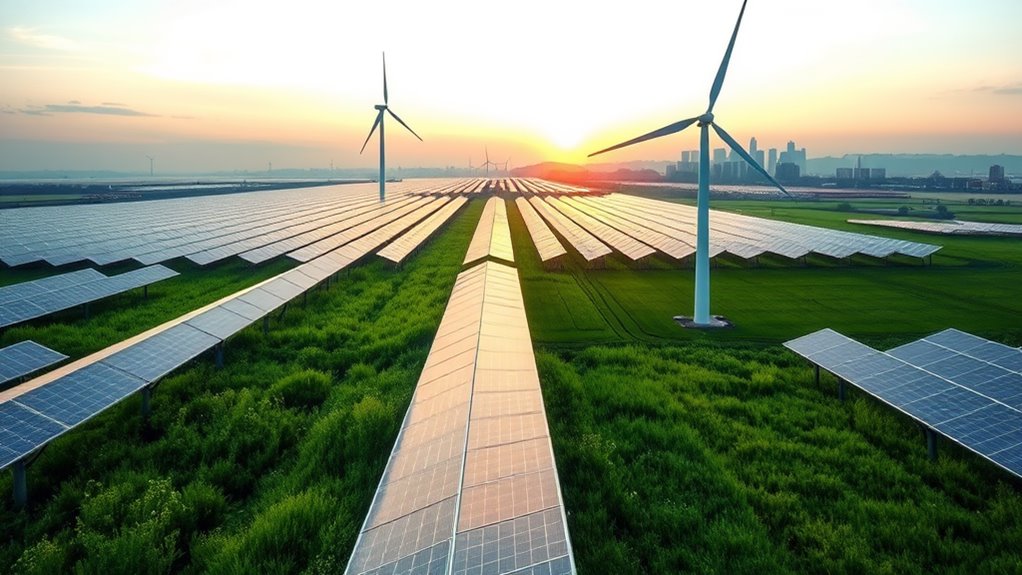
Green Transitions and the Political Economy of Energy
Subtitle
The Scientific Journal for Everyone – When scientists speak human, people listen.
Summary
The shift from fossil fuels to clean energy is not just a technological revolution—it’s a political and economic one. The green transition is transforming who holds power, who pays for change, and who benefits from the new energy order.
This article explores the political economy of energy in the era of climate action: the interests, institutions, and inequalities shaping the path toward decarbonization. From industrial lobbying to geopolitical realignment, the green transition is more than a switch—it’s a struggle.
Why It Matters
The future of energy defines the future of economies, jobs, and sovereignty. The political economy lens helps explain:
-
Why some countries lead while others lag in climate action
-
Why fossil fuel interests resist change—or adapt strategically
-
Who bears the cost of transition—and how just it really is
-
How global energy trade and diplomacy are being reshaped
-
What risks (and opportunities) come from decarbonizing at scale
Without political economy, the green transition can look like a matter of engineering. With it, we see the power struggles beneath the solar panels.
What the Research Shows
1. Green transitions are not neutral
-
Shifts in energy systems create winners and losers across industries, regions, and social groups.
-
Fossil fuel sectors (coal, oil, gas) have historically wielded strong political influence—through lobbying, subsidies, and employment.
-
Decarbonization disrupts these power bases—prompting resistance, adaptation, or co-option (Newell & Paterson, 2020).
2. Public support depends on fairness
-
Policies like carbon pricing can trigger backlash if perceived as regressive or unfair (e.g. France’s Yellow Vests).
-
“Just transition” strategies—protecting vulnerable workers and regions—are essential for sustained legitimacy.
-
Trust in institutions, transparency, and participation increase policy acceptance (European Environment Agency, 2023).
3. Global power is shifting
-
China dominates clean tech supply chains (solar, batteries, rare earths), prompting geoeconomic tensions.
-
Europe’s Green Deal combines climate goals with industrial policy, aiming for autonomy and competitiveness.
-
Fossil-fuel-dependent exporters (Russia, Gulf States) face long-term risks—though short-term volatility can still empower them.
4. Investment and ownership patterns matter
-
Who finances and owns renewable infrastructure determines who benefits from green growth.
-
Public banks (e.g. EIB) and green state funds can ensure strategic direction—but private capital dominates many sectors.
-
Energy democracy models (e.g. community-owned solar) offer inclusive alternatives—but remain niche.
What’s Behind It
1. The Fossil Fuel Political Order
-
For over a century, fossil fuels shaped global capitalism:
-
Centralized infrastructure
-
Capital-intensive industries
-
Powerful corporate-state alliances
-
-
This system created carbon lock-in—not just in technology, but in institutions, habits, and interests.
2. The Green Transition Is Uneven
-
Countries and regions vary dramatically in:
-
Exposure to climate risks
-
Economic dependence on fossil fuels
-
Institutional capacity for reform
-
Public trust and political polarization
-
This makes climate policy a terrain of conflict, not consensus.
3. Stranded Assets and Strategic Resistance
-
As clean energy expands, fossil assets risk becoming “stranded”—losing value before end-of-life.
-
Incumbents respond with delay tactics:
-
Lobbying against climate targets
-
Promoting natural gas as a “bridge” fuel
-
Framing energy security in terms of supply, not demand
-
Understanding resistance is crucial for overcoming it.
What’s Changing
1. Energy security meets climate policy
-
The Ukraine war and energy crisis of 2022–2023 reinforced the link between clean energy and sovereignty.
-
The EU’s REPowerEU plan aims to replace Russian gas with renewables and efficiency gains.
-
Energy is now seen as a geopolitical and democratic issue, not just an environmental one.
2. The return of industrial policy
-
The US Inflation Reduction Act (IRA) and the EU Green Deal Industrial Plan mark a shift from market-led to state-led transitions.
-
Public subsidies and strategic planning aim to:
-
Anchor green industries domestically
-
Create quality jobs
-
Reduce import dependency
-
But there’s a risk of green protectionism and global fragmentation.
3. From carbon markets to climate justice
-
Climate policy is expanding beyond pricing mechanisms (like the EU ETS) to include:
-
Regulation (e.g. bans on combustion engines)
-
Social investment (e.g. building retrofits, public transport)
-
Redistribution (e.g. green social funds)
-
Justice, equity, and participation are becoming central criteria, not afterthoughts.
Big Picture
The green transition is not a technocratic upgrade—it’s a transformation of political and economic power.
-
It challenges who controls energy and who benefits from change.
-
It disrupts fossil fuel incumbents—and empowers new coalitions.
-
It requires governments to steer markets, not just fix failures.
-
And it demands that climate policy be fair, inclusive, and democratic—or risk backlash and failure.
We are entering the era of climate political economy—and the stakes are enormous.
Conclusions
1. Climate policy is power politics
The green transition alters economic structures, social contracts, and international relations. It must be managed—not just announced.
2. Markets alone won’t deliver
Public investment, strategic planning, and inclusive governance are key to successful transitions.
3. Justice is not a luxury—it’s a necessity
Without fairness, even well-designed climate policies will face resistance. Just transition plans are not add-ons—they are foundations.
4. Global competition is reshaping the clean energy race
Access to green tech and critical materials is becoming a new axis of geopolitical strategy.
5. Who owns the future matters
Public vs. private control of green infrastructure will determine whether decarbonization reproduces inequality—or tackles it.
The deeper lesson
The green transition is not just about replacing fuels.
It’s about restructuring economies and reimagining futures.
And if we don’t address who pays, who benefits, and who decides,
the energy transition could deepen the very inequalities it seeks to solve.
Sources
-
Newell, P., & Paterson, M. (2020). Climate Capitalism: Global Warming and the Transformation of the Global Economy
-
European Commission (2023). REPowerEU and Green Deal Industrial Plan
-
EEA (2023). Public Perceptions and Climate Policy Acceptance
-
IEA (2024). World Energy Outlook
-
UNFCCC (2023). Just Transition Pathways Report
-
Mazzucato, M. (2021). Mission Economy: A Moonshot Guide to Changing Capitalism
Q&A Section
What is the political economy of energy?
It’s the study of how power, institutions, and interests shape energy systems—who owns them, who profits, and who makes the rules.
Why is the green transition so political?
Because it creates winners and losers, shifts economic power, and requires major public intervention.
What is a “just transition”?
A framework to ensure that climate action protects workers, vulnerable groups, and communities—through support, retraining, and investment.
How are global energy politics changing?
Control of clean tech (like solar panels and batteries) is reshaping trade, supply chains, and global influence—especially between China, the US, and the EU.
What should governments do now?
Develop long-term green industrial strategies, invest in public goods, engage affected communities, and ensure that the transition is socially and geographically fair.
