
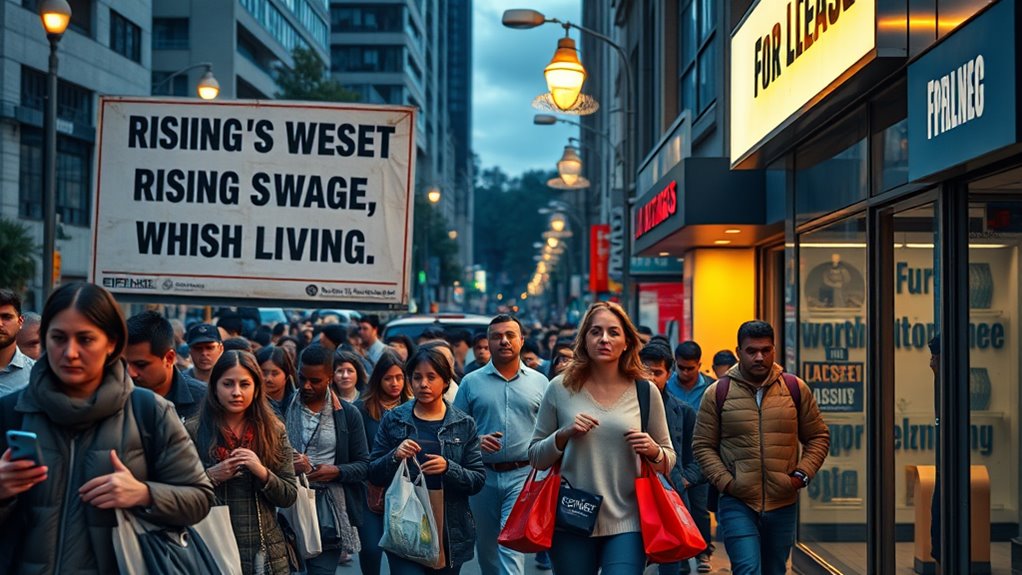
Inflation vs. Wages: Why the Cost of Living Crisis Isn’t Over
Subtitle
The Scientific Journal for Everyone – When scientists speak human, people listen.
Summary
Inflation is finally cooling in many countries, but for most households, the crisis isn’t over. Prices remain high, real wages have barely recovered, and essential goods—like food, housing, and energy—remain unaffordable for many.
The gap between slowing inflation and stagnant earnings reveals a deeper truth: the cost-of-living crisis is no longer just about inflation. It’s about wages, inequality, and the structural weakness of the modern labor market.
Why It Matters
The public hears that inflation is “falling.” But if people feel poorer, the disconnect breeds distrust in policy—and in institutions.
Here’s why this matters:
-
Wages still lag behind prices in real terms for millions.
-
Inflation may slow, but price levels remain elevated—especially for essentials.
-
Lower-income households face disproportionate burdens, as they spend more on food, rent, and energy.
-
Public anger is rising, fueling strikes, protests, and political instability.
-
Monetary policy alone can’t solve this crisis—the root lies in labor markets, profits, and redistribution.
In short: A narrow focus on inflation overlooks the lived reality of economic strain. The crisis isn’t over because the conditions that created it haven’t been addressed.
What the Research Shows
-
Real wages declined across the OECD: In 2022–2023, real wages fell in 26 out of 38 OECD countries, even as nominal wages increased (OECD, 2024).
-
Essential goods are “stickier” than headline inflation: Core inflation may fall, but food prices in Europe remain 30–40% higher than in 2019, while rents continue to climb (Eurostat, 2024).
-
Corporate profits have outpaced labor income: In sectors like energy, food retail, and housing, profit margins rose sharply during inflation spikes, suggesting “profit-price inflation” rather than wage-driven price hikes (IMF, 2023).
-
Minimum wage increases have not kept up: Even in countries with indexation mechanisms, wage floors remain below pre-crisis purchasing power (ETUI, 2024).
-
Low-wage workers and women are hit hardest: Labor markets that rely heavily on precarious or part-time work show persistent earnings gaps, especially in care, service, and informal sectors (ILO, 2024).
Together, these findings show that the cost-of-living crisis is structural, not just cyclical.
What’s Behind It
The crisis is not simply a matter of price and pay. It stems from deeper imbalances in the way modern economies are structured.
1. Decoupling of productivity and wages
Since the 1990s, many economies have seen productivity rise faster than real wages—especially for middle- and low-income workers. Profits have increased, but pay has stagnated.
2. Weak labor bargaining power
Declining union density, labor market flexibilization, and gig work have weakened collective wage-setting, especially in sectors with high job churn or low skill recognition.
3. High fixed costs for households
Housing, childcare, transport, and utilities are non-negotiable expenses that eat up larger shares of income. Inflation in these sectors hits differently than in luxury goods.
4. Monetary policy trade-offs
Rising interest rates may curb inflation, but they also raise mortgage costs, slow hiring, and reduce investment, which can suppress wage growth.
5. Price-setting power of dominant firms
In concentrated markets—like food retail, logistics, or energy—large firms can raise prices more easily than wages rise, especially when demand is inelastic.
This constellation of forces means that even when inflation moderates, households may not feel any better off.
What’s Changing
While policymakers acknowledge the crisis, responses remain fragmented:
-
Wage negotiations are intensifying: Across Europe and North America, unions are pushing for catch-up raises, often in sectors like transport, health, and education.
-
Indexation is returning: Some countries are reintroducing automatic wage indexation—tying pay to inflation—to protect purchasing power.
-
Living wage campaigns are gaining momentum: Civil society groups are advocating for realistic wage floors that reflect local cost-of-living.
-
Fiscal responses vary: Some governments have offered temporary subsidies or energy rebates, but these are often short-term fixes, not structural solutions.
-
Debate is shifting toward redistribution: Economists are calling for tax reforms, price controls, and excess profit taxes to rebalance income flows.
Yet a comprehensive, coordinated strategy to link wage growth to economic fundamentals is still lacking in most countries.
Big Picture
The inflation shock has exposed a deeper vulnerability: wages and work no longer guarantee economic security.
-
Can labor markets deliver not just jobs, but livable incomes?
-
Can price stability coexist with fair distribution of income and risk?
-
Can governments move from emergency responses to long-term reform?
In short: The cost-of-living crisis is not just a side effect of inflation—it’s a structural feature of unequal economies.
Conclusions
Slowing inflation is good news—but not a solution.
1. Price levels, not just inflation rates, matter
Even when inflation drops, prices remain high. Without meaningful wage growth, real income losses persist—especially for the bottom half of earners.
2. Profits have absorbed inflation more easily than wages
While firms passed on higher costs to consumers—and often increased margins—workers bore the brunt. This calls for a rebalancing of policy attention from prices to pay.
3. Labor markets must be empowered
Raising minimum wages, strengthening collective bargaining, and rethinking wage-setting institutions are essential for turning growth into shared prosperity.
4. Monetary policy needs social context
Interest rate decisions cannot be separated from distributional impacts. Policymakers must weigh the trade-off between inflation control and wage suppression more transparently.
5. The future of economic legitimacy is at stake
If people feel the system works for profits but not paychecks, distrust grows—and so does political instability. Restoring economic dignity through wage justice is not just economic policy—it’s democratic necessity.
The deeper lesson
The real question isn’t whether inflation is falling. It’s whether people can afford to live.
This is no longer a temporary disruption—it’s a wake-up call. The crisis will only end when work delivers enough to cover the cost of living, with dignity and security.
Until then, headlines may calm—but household budgets won’t.
Sources
-
OECD (2024). Wage Outlook in Advanced Economies
-
Eurostat (2024). Consumer Price Trends in the EU
-
IMF (2023). World Economic Outlook: Inflation and Profit Margins
-
ETUI (2024). Minimum Wage Report
-
ILO (2024). Global Wage Report: Gender and Informality
Q&A Section
Why are people still struggling if inflation is falling?
Because prices are still high—and wages haven’t caught up. Inflation slowing doesn’t mean things are cheaper, just that they’re rising more slowly.
Is the crisis worse for lower-income households?
Yes. Essentials like food and housing take up more of their income, and they’re less likely to benefit from wage increases or job mobility.
What about minimum wage increases?
Helpful—but often too small or too late. Many are not indexed to inflation, so real purchasing power remains eroded.
Are profits to blame?
In part. Some sectors raised prices more than needed, increasing margins during the inflation spike.
What can governments do?
Strengthen wage-setting mechanisms, support income redistribution, and ensure essential goods and services are affordable—through subsidies, regulation, or public provision.
