
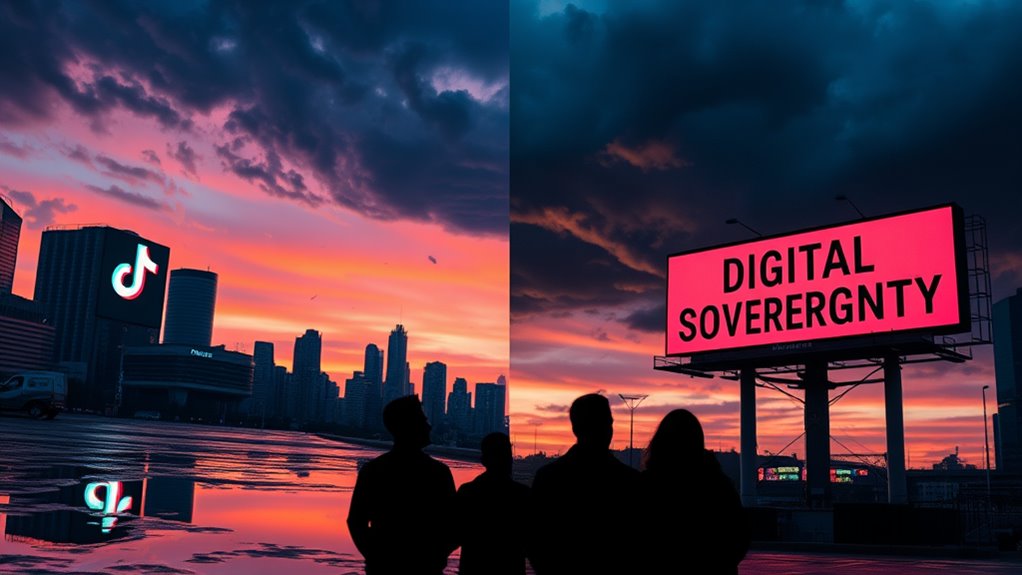
TikTok Bans and Digital Sovereignty: What’s Really Behind It?
Subtitle
The Scientific Journal for Everyone – When scientists speak human, people listen.
Summary
TikTok, the wildly popular social media platform owned by Chinese company ByteDance, faces growing scrutiny and potential bans across Western democracies. Governments from the United States to the European Union have cited national security, data privacy, and algorithmic influence as reasons for restricting the app—particularly on public-sector devices.
But beneath the headlines lies a deeper story about digital sovereignty, geopolitical competition, and the future of internet governance. TikTok is no longer just a viral video platform—it’s become a battleground for who controls data, influence, and infrastructure in a fragmented digital world.
Why It Matters
TikTok bans are not just about one company—they reflect larger questions of digital power, economic competition, and political control:
-
Who controls the data of hundreds of millions of citizens?
-
Can foreign-owned platforms operate freely in democratic systems?
-
What role should governments play in regulating digital ecosystems?
-
Is the open internet giving way to nationalized “splinternets”?
These questions go far beyond TikTok. They concern the architecture of the digital age, and the balance between innovation, sovereignty, and security.
What the Research Shows
-
TikTok collects extensive personal data, including location, browsing habits, biometric data, and device info—raising concerns about potential misuse or transfer to Chinese authorities (Mozilla Foundation, 2024).
-
No public evidence has yet emerged of coordinated Chinese state interference via TikTok, but intelligence agencies warn that algorithmic manipulation remains a latent risk, especially during elections (ODNI, 2024).
-
More than 20 countries have imposed restrictions on TikTok, including total bans in India, government-device bans in the US, Canada, and EU, and pending legislation in Australia and the UK (Freedom House, 2025).
-
Young users rely heavily on TikTok for news: Studies show that more than 30% of Gen Z users get political information from TikTok, making content moderation and algorithm transparency critical (Reuters Institute, 2024).
-
Attempts to force ByteDance to divest TikTok’s US operations have raised legal and constitutional questions, especially regarding First Amendment protections and executive authority over tech platforms (Brookings, 2025).
The evidence suggests that TikTok is a symptom of a broader governance vacuum in global tech—not the sole cause of digital insecurity.
What’s Behind It
The campaign against TikTok is rooted in both immediate risks and deeper strategic concerns:
1. Geopolitical Rivalry with China
As US-China tensions grow over trade, semiconductors, and military posture, tech platforms are becoming tools of economic statecraft and information power. TikTok is seen by some as Beijing’s cultural and data beachhead in the West.
2. Fear of Algorithmic Influence
Unlike traditional media, TikTok’s algorithm shapes what users see with opaque and highly personalized logic. Western governments worry about potential bias, radicalization, or censorship, even if it’s not centrally directed.
3. Data Localization and National Control
Many democracies are pushing for data sovereignty—ensuring that citizen data is stored, processed, and protected under domestic laws. TikTok’s data flows raise questions about cross-border legal enforcement.
4. Platform Governance Failure
The lack of clear international rules for platform accountability, AI transparency, or cross-border content moderation has left governments improvising bans, often in legally shaky ways.
5. Political Signaling and Public Opinion
Banning TikTok plays well with segments of the public that distrust China or are wary of social media’s influence—making it a symbolic gesture of sovereignty, even if its real-world effect is limited.
Together, these dynamics show that TikTok is not just a tech issue—it’s a proxy for 21st-century digital governance battles.
What’s Changing
The TikTok debate is catalyzing broader changes in the digital policy landscape:
-
Governments are introducing platform-specific laws: The US has passed the RESTRICT Act, while the EU’s Digital Services Act (DSA) imposes new obligations on large platforms—including transparency and risk audits.
-
Data localization policies are gaining ground: Countries from India to France are demanding that data be stored on national soil, raising compliance costs and regulatory complexity.
-
Tech sovereignty is becoming an EU doctrine: The EU aims to reduce dependency on US and Chinese platforms by promoting open-source alternatives, domestic cloud infrastructure, and stricter merger scrutiny.
-
Cross-border content moderation is under review: The question of who decides what is visible online—and by what rules—is becoming more contested, especially with AI-driven feeds.
-
China is playing defense: Beijing has tightened export controls on recommendation algorithms, making forced TikTok divestitures harder and signaling retaliation if Western firms target Chinese tech.
The result? A global internet that is less open, more segmented, and increasingly subject to state interests.
Big Picture
TikTok may be the most visible case, but it’s not unique. As global trust in big platforms erodes, and geopolitical tensions rise, we’re seeing a redefinition of the digital order:
-
Can open societies regulate platforms without undermining free speech?
-
Can democracies compete with digital authoritarian models?
-
Can global internet norms survive national fragmentation?
In short: We are moving from the age of the “free internet” to the age of digital borders—and TikTok is just the beginning.
Conclusions
TikTok bans are the tip of a much larger iceberg. At stake is not just what videos go viral—but who sets the rules for the digital world, and in whose interest.
1. Digital sovereignty is now a strategic priority
Governments are realizing that digital infrastructure, data control, and platform governance are core elements of national security and economic resilience.
2. Platform bans are blunt tools
While politically popular, bans risk being ineffective, hard to enforce, and legally vulnerable. Broader digital governance reforms are needed instead.
3. Trust is the missing infrastructure
Without independent oversight, transparency standards, and user rights, no platform can be truly trusted—whether it’s Chinese, American, or European.
4. The global internet is fragmenting
What began as a single, open network is becoming a patchwork of national and regional internets, shaped by sovereignty, censorship, and regulatory divergence.
5. We need global rules for digital coexistence
The long-term solution is not endless bans or techno-nationalism—but shared norms, interoperable laws, and accountable platforms. That will require global cooperation—even amid geopolitical rivalry.
The deeper lesson
TikTok is not just a platform. It’s a mirror reflecting the gaps in our global governance, the fragility of open systems, and the anxiety of democratic societies under digital stress.
If democracies want to lead in the digital era, they must do more than ban—they must build a new, inclusive digital order that earns public trust and withstands political pressure.
Otherwise, the future of the internet will be written by fear—and redrawn by borders.
Sources
-
Mozilla Foundation (2024). TikTok’s Data Practices and User Risk
-
ODNI (2024). Annual Threat Assessment of the U.S. Intelligence Community
-
Freedom House (2025). Internet Freedom Index
-
Reuters Institute (2024). News Consumption Among Gen Z
-
Brookings (2025). Constitutional Risks of Platform Bans
-
European Commission (2024). Digital Services Act Briefing
Q&A Section
Is TikTok actually spying on users?
There’s no public evidence of active surveillance, but the app collects extensive data, and China’s national security laws raise concerns about potential state access.
Why not regulate instead of ban?
That’s the ideal. But many governments argue that regulatory tools are too slow or weak, especially in high-risk contexts like government devices or elections.
Do other apps collect similar data?
Yes—many Western apps collect similar user data. The difference lies in who owns the data, where it’s stored, and who can access it under law.
Is banning TikTok a free speech issue?
Potentially, yes—especially in democracies where access to information is constitutionally protected. That’s why blanket bans face legal challenges.
What comes after TikTok?
More scrutiny. Expect increased regulation of all major platforms, especially around algorithms, foreign ownership, and misinformation.
