
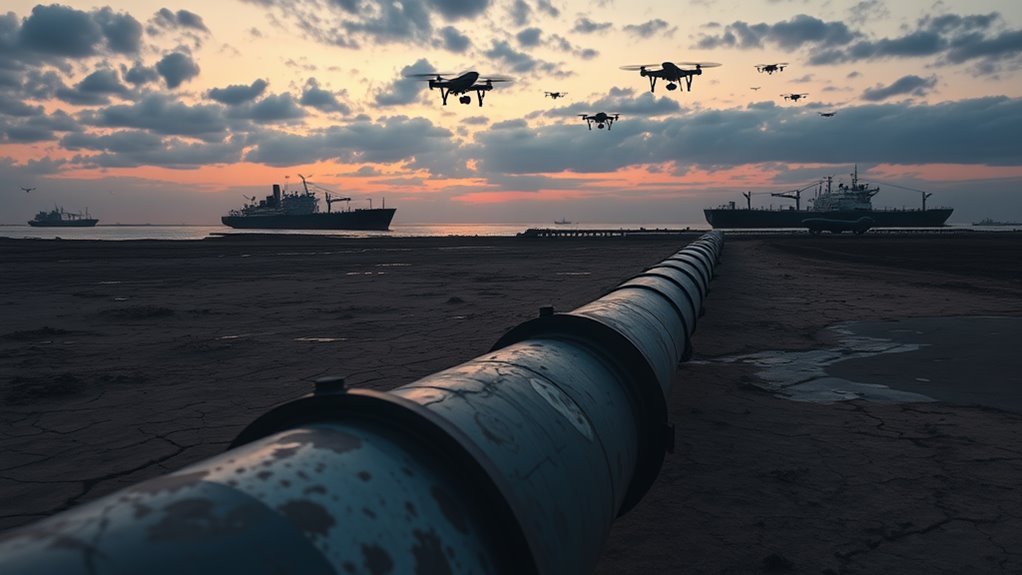
Iran-Israel Tensions: What’s at Risk for Global Energy
Subtitle
The Scientific Journal for Everyone – When scientists speak human, people listen.
Summary
As tensions between Iran and Israel escalate in 2025, fears of a regional conflict are reigniting concern across global energy markets. While headlines focus on military maneuvers and diplomatic breakdowns, the real economic story lies beneath the surface—in oil prices, shipping lanes, and energy security.
This is not just a geopolitical feud. It’s a risk multiplier for a global economy already grappling with inflation, climate volatility, and post-pandemic recovery. The Middle East remains a vital artery in the world’s energy system, and any disruption could send shockwaves through fuel costs, trade routes, and political alliances.
Why It Matters
At the heart of the Iran-Israel conflict is strategic geography and energy interdependence. Here’s why it matters for everyone:
-
The Strait of Hormuz handles 20% of global oil flows. Any blockade or disruption would immediately spike oil prices.
-
Energy inflation hits everything—from electricity bills to food prices, logistics, and industrial production.
-
Risk premiums affect global finance. Oil markets, insurance rates, and currency valuations all respond to geopolitical heat.
-
Energy-importing countries—especially in Europe and Asia—are highly exposed. Their energy security depends on the flow of Persian Gulf resources.
-
A wider conflict could derail green energy investments, as governments re-prioritize short-term energy stability over long-term transition goals.
In short: When the Middle East shakes, the world’s energy markets quake.
What the Research Shows
-
Oil prices are hypersensitive to Gulf tensions: Even limited skirmishes in the region have historically raised crude oil prices by 5–15% within days (IEA, 2023).
-
Supply chain chokepoints amplify disruption: The Strait of Hormuz and Bab el-Mandeb are narrow, easily blockaded maritime routes that carry over 30 million barrels per day (EIA, 2024).
-
Strategic reserves are finite: While OECD countries hold emergency stocks, they can only offset major supply disruptions for 30–90 days, depending on severity (IEA, 2024).
-
Energy shocks hit developing countries hardest: Fuel importers in Sub-Saharan Africa and South Asia face food insecurity and balance-of-payment crises when energy prices surge (IMF, 2023).
-
Geopolitical risk is now a persistent market driver: Oil and gas futures have built-in volatility tied not just to supply and demand—but also to political escalation risk (Bloomberg, 2025).
Together, this research confirms: the global economy remains structurally vulnerable to Middle East conflict.
What’s Behind It
Iran-Israel tensions are not new—but their energy implications are evolving, especially as new alliances, weapons systems, and global dependencies emerge.
1. The Nuclear Shadow
The unresolved standoff over Iran’s nuclear program, and recent military exchanges in Syria and Lebanon, raise the risk of direct confrontation—with potential targeting of infrastructure.
2. Proxy Conflicts Expand the Theater
From Hezbollah in Lebanon to militias in Iraq and Syria, a wider network of armed actors could disrupt pipelines, refineries, or shipping.
3. Energy Infrastructure Is a Target
Iran’s vulnerability lies in its own export infrastructure; Israel’s energy investments (especially in the Eastern Mediterranean) are also at risk. Cyberattacks and sabotage are rising concerns.
4. Sanctions and Trade Route Politics
Renewed U.S. or EU sanctions on Iran could restrict oil exports, while retaliation might involve closing the Strait of Hormuz—a move that would trigger global energy panic.
5. Strategic Alliances Are Shifting
As China increases its role in Middle Eastern diplomacy and energy trade, and the U.S. recalibrates its presence, conflict could trigger broader economic alignment shifts.
The mechanisms at play reveal a tightly wound system: one that runs on fossil fuels and foreign policy, not just supply and demand.
What’s Changing
Several recent shifts have heightened the risks:
-
Oil demand is recovering post-COVID, especially in Asia, tightening global supply margins.
-
The U.S. is no longer a passive energy importer—as a major oil producer, it is both shielded and exposed to price volatility.
-
Europe is still rebalancing from Russian gas cuts, increasing its dependence on LNG imports and Persian Gulf crude.
-
China is the biggest wildcard: as the top importer of Iranian oil (often through opaque channels), it may play peacemaker or profiteer, depending on escalation.
-
New military tech—including drones, missiles, and cyber tools—makes infrastructure more vulnerable, even from afar.
These dynamics mean that a small spark could ignite a systemic crisis.
Big Picture
The Iran-Israel tension is more than a diplomatic standoff. It is:
-
A test of energy geopolitics in a multipolar world
-
A stress point for inflation control, central bank planning, and fiscal stability
-
A litmus test for green transition urgency—will conflict delay or accelerate decarbonization?
-
A reminder of fossil fuel fragility, even as economies try to diversify energy sources
In short: This crisis is a lens into how energy, war, and economics now operate as a single system.
Conclusions
This is not just about Iran or Israel. It’s about the global energy system’s vulnerability—and the policies that can reduce it.
1. Diversification is essential—but not fast enough
Most economies are trying to reduce oil dependence. But green energy capacity, storage, and infrastructure still lag behind geopolitical urgency.
2. Strategic coordination must be revived
Emergency stockpiles, maritime protection, and diplomatic backchannels must be re-integrated across regions and institutions.
3. Energy diplomacy is as important as military deterrence
Calming oil markets sometimes requires talks more than troops. Multilateral engagement—especially with China and Gulf states—is key.
4. Fossil fuel dependence is a strategic liability
Until renewables become truly dominant, fossil energy will remain a source of coercion and instability. The longer the transition delays, the higher the cost.
5. Risk mitigation should include vulnerable nations
Small economies reliant on imports—especially in Africa, Southeast Asia, and Latin America—need coordinated support to weather energy price shocks.
The deeper lesson
Geopolitical tensions don’t just threaten borders—they threaten economic continuity, household stability, and global cooperation.
The Iran-Israel crisis is a stark reminder that the world’s energy security is still hostage to regional conflict and fossil fuel chokepoints.
Until we redesign our energy systems, we will keep replaying this same crisis—at ever higher cost.
Sources
-
International Energy Agency (2023–2024). Energy Security Reports
-
U.S. Energy Information Administration (2024). Strait of Hormuz Data Sheet
-
IMF (2023). Energy Price Shocks and Emerging Markets
-
Bloomberg Intelligence (2025). Geopolitical Risk Premium Tracker
-
World Bank (2024). Energy and Fragile States
-
Middle East Policy Council (2025). Security and Oil in the Persian Gulf
Q&A Section
Will oil prices spike if war breaks out?
Yes. Even limited attacks on infrastructure or shipping lanes could raise oil prices by 10–20% within days, especially if the Strait of Hormuz is involved.
Can countries manage without Persian Gulf oil?
Not easily. While the U.S. and some others have buffers, Europe and Asia still depend heavily on Gulf flows—especially in winter months.
Is nuclear energy or renewables the answer?
Long-term, yes. But building those systems takes years. In the short term, energy security still revolves around oil logistics and diplomacy.
What should governments be doing now?
-
Strengthen diplomatic pressure to de-escalate
-
Protect shipping routes
-
Expand strategic reserves
-
Support vulnerable economies with energy subsidies or aid
Could this delay climate goals?
Possibly. If energy prices spike, governments might reopen coal or oil subsidies to avoid unrest—a step backwards for decarbonization unless paired with long-term solutions.
